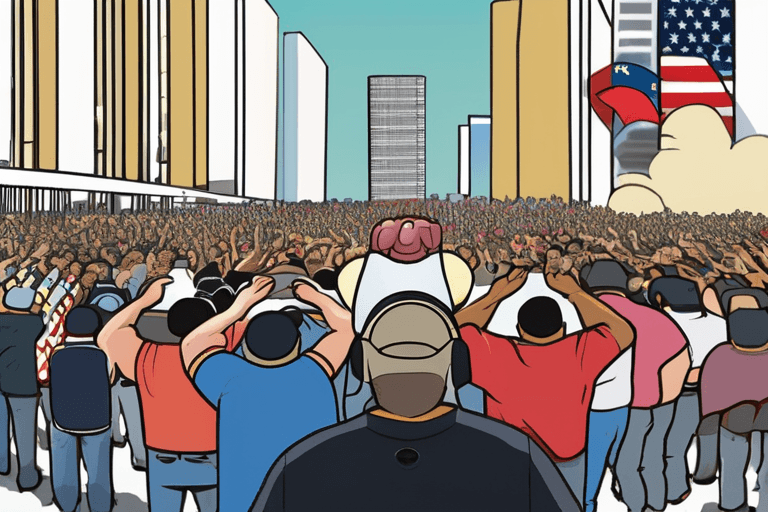
US military intervention in Venezuela triggered protests across major US cities, raising concerns about potential economic repercussions and market instability. The demonstrations, fueled by opposition to the Trump administration's actions, coincided with celebrations within the Venezuelan diaspora over the ousting of Nicolás Maduro.
While specific financial figures directly tied to the protests were not immediately available, analysts pointed to the potential for increased market volatility. Military interventions often lead to fluctuations in commodity prices, particularly oil, given Venezuela's significant reserves. Investors typically react to geopolitical uncertainty by shifting assets, potentially impacting stock markets and currency values.
The market context surrounding the situation is complex. Venezuela's economy has been in a state of crisis for years, marked by hyperinflation and widespread shortages. US sanctions have further exacerbated the economic hardship. The potential for a US-led military intervention added another layer of uncertainty, impacting investor confidence and potentially disrupting trade relationships.
The protests highlighted a growing divide within the US regarding foreign policy and interventionism. This sentiment could translate into pressure on corporations with business interests in Venezuela, potentially leading to divestment or boycotts. Furthermore, the situation underscored the challenges faced by companies operating in politically unstable regions, requiring them to navigate complex legal and ethical considerations.
Looking ahead, the future economic outlook remains uncertain. The success of any transition government in Venezuela will depend on its ability to stabilize the economy, attract foreign investment, and address the country's deep-seated social and political problems. The US role in this process, and the level of international support, will be crucial factors in determining the long-term economic trajectory of Venezuela and its impact on global markets.















Discussion
Join the conversation
Be the first to comment