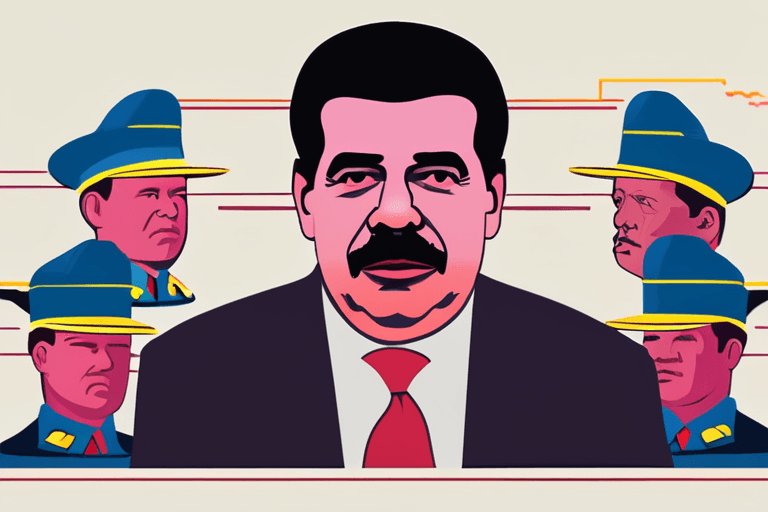
On orders from U.S. President Donald Trump, the U.S. military seized Venezuelan leader Nicolás Maduro, an action announced at a news conference at Trump's Mar-a-Lago club in Florida with what international editor Jeremy Bowen described as "enormous implications for US foreign policy worldwide." Trump stated the U.S. would govern Venezuela "until such time as we can do a safe, proper and judicious transition."
The move raises concerns about the precedent it sets for authoritarian powers globally, potentially emboldening them to intervene militarily in other nations under the guise of ensuring stability or regime change. Trump indicated a willingness to use military force, stating, "we're not afraid of boots on the ground if we have to have them."
Secretary of State Marco Rubio reportedly spoke with Venezuelan Vice-President Delcy Rodríguez, who, according to Trump, indicated a willingness to cooperate, saying "we'll do whatever you need... She, I think, was quite gracious, but she really doesn't have a choice."
This intervention follows years of strained relations between the U.S. and Venezuela, marked by U.S. sanctions aimed at pressuring Maduro to step down. The U.S. has long accused Maduro of human rights abuses, corruption, and undermining democracy. The Venezuelan government has consistently denounced U.S. interference in its internal affairs, claiming the sanctions have exacerbated the country's economic crisis.
Critics argue that Trump's actions violate international law and the principle of national sovereignty. They contend that regime change should be driven by the Venezuelan people, not imposed by external forces. The long-term consequences of this intervention remain uncertain, but analysts suggest it could lead to increased instability in the region and further erode trust in international norms.
The international community has reacted with a mix of condemnation and cautious support. Some nations have echoed concerns about the violation of sovereignty, while others have expressed hope that the U.S. intervention will pave the way for a peaceful resolution to Venezuela's political crisis. The situation remains fluid, with the potential for further developments in the coming days and weeks.













Discussion
Join the conversation
Be the first to comment