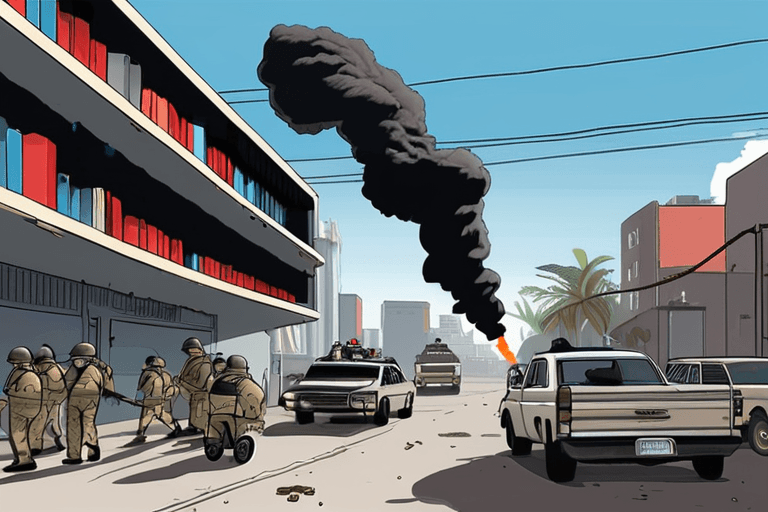
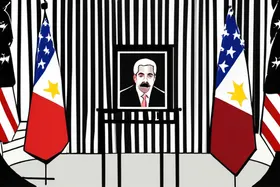
United Nations – The United States faced widespread condemnation at an emergency meeting of the UN Security Council on Monday for what many nations described as a "crime of aggression" in Venezuela. The meeting was convened following deadly U.S. strikes on Venezuelan territory and the capture of Venezuelan President Nicolás Maduro and his wife, Cilia Flores.
Brazil, China, Colombia, Cuba, Eritrea, Mexico, Russia, South Africa, and Spain were among the countries that denounced the actions taken by the Trump administration. Sérgio França Danese, the Brazilian ambassador to the UN, stated that the "bombings on Venezuelan territory and the capture of its president cross an unacceptable line."
The U.S. Ambassador to the UN defended the actions, characterizing them not as an act of war, but as a law enforcement operation against an illegitimate leader. The ambassador argued that Maduro's regime was responsible for widespread human rights abuses, corruption, and economic mismanagement, justifying the intervention as a necessary step to restore democracy and stability to Venezuela.
The situation marks a significant escalation in the long-standing tensions between the U.S. and Venezuela. Maduro's government has been a vocal critic of U.S. foreign policy in Latin America, accusing Washington of interference and imperialism. The U.S., in turn, has accused Maduro of authoritarianism and has imposed sanctions on Venezuelan officials and entities.
The intervention has sparked debate about the limits of national sovereignty and the use of force in international relations. Critics argue that the U.S. action violates international law and sets a dangerous precedent for intervention in the affairs of other countries. Supporters, however, maintain that the U.S. has a responsibility to protect human rights and promote democracy, even if it means intervening in the internal affairs of other nations.
The UN Security Council is now considering a resolution condemning the U.S. action and calling for the immediate release of Maduro and his wife. However, the resolution faces an uncertain future, as the U.S. has the power to veto any resolution in the Security Council. The international community remains deeply divided over the situation, and the future of Venezuela remains uncertain. The incident has been described by some observers as a manifestation of the "Putinization" of U.S. foreign policy, referencing a perceived shift towards more assertive and unilateral actions on the global stage.

















Discussion
Join the conversation
Be the first to comment