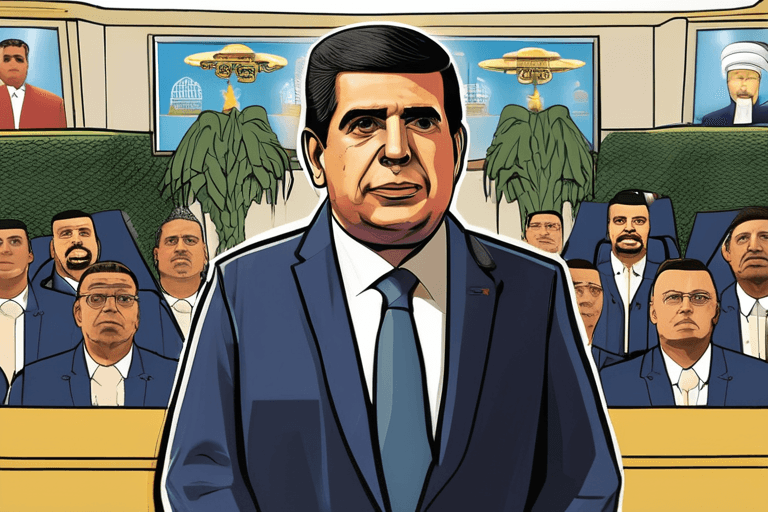
In the opulent setting of Riyadh, amidst the Fortune Global Forum, María Corina Machado, a figure synonymous with Venezuelan resistance, painted a picture of hope. It was October, and she envisioned a future where Donald Trump, then President of the United States, would champion a Venezuelan-led democratic transition. Fast forward to the present, and the Nobel Peace Prize laureate finds herself not only sidelined but seemingly betrayed by the very force she once hoped would liberate her nation.
Machado's story is a microcosm of the complex and often fraught relationship between international intervention and national sovereignty. Venezuela, a nation rich in oil but plagued by political turmoil and economic collapse, has long been a pawn in the geopolitical chessboard. The rise of Hugo Chávez in the late 1990s, with his socialist revolution and anti-American rhetoric, marked a turning point. His successor, Nicolás Maduro, has presided over a period of deepening crisis, marked by hyperinflation, shortages of basic goods, and widespread human rights abuses.
For years, the international community has grappled with how to respond. The United States, under successive administrations, has imposed sanctions and diplomatic pressure, seeking to isolate Maduro's regime. European nations have echoed these concerns, albeit with a greater emphasis on dialogue and negotiation. Latin American countries, once largely sympathetic to Chávez's socialist project, have become increasingly critical of Maduro's authoritarian tendencies.
Machado emerged as a leading voice of the opposition, advocating for a firm stance against Maduro and a return to democratic principles. Her unwavering commitment to free and fair elections, her articulate critiques of the regime's corruption, and her personal sacrifices – including periods in hiding – resonated with Venezuelans yearning for change. Her Nobel Peace Prize, awarded in 2025, was a testament to her courage and a symbol of hope for a nation in despair.
It was against this backdrop that Machado placed her faith, however fleetingly, in Donald Trump. She saw in his tough rhetoric and willingness to challenge the status quo a potential ally in her struggle. Her interview at the Fortune Global Forum, now tinged with irony, revealed her belief that escalating pressure on Maduro was essential. She described his regime as a "criminal structure, a narco-terrorist structure" that was destabilizing the region.
But Trump's vision for Venezuela appears to have diverged sharply from Machado's. Instead of empowering Venezuelan opposition figures, Washington seems to be contemplating a U.S.-managed transition, potentially involving elements within the Chavista movement. The focus has shifted towards securing U.S. control of Venezuelan oil, a move that smacks of neo-colonialism and undermines the principle of national self-determination. Furthermore, reports suggest that Washington is considering partnering with Maduro loyalists, a betrayal of the democratic aspirations of the Venezuelan people.
"It's a classic case of realpolitik trumping idealism," says Dr. Isabella Marquez, a professor of Latin American studies at the London School of Economics. "The United States, like any major power, is driven by its own strategic interests. While it may pay lip service to democracy and human rights, its primary concern is often securing access to resources and maintaining its geopolitical influence."
The implications of this shift are profound. It risks alienating the Venezuelan opposition, emboldening Maduro, and further destabilizing the region. It also raises questions about the credibility of the United States as a champion of democracy abroad. If Washington is willing to cut deals with authoritarian regimes for its own benefit, what message does that send to other countries struggling for freedom and self-determination?
Machado's experience serves as a cautionary tale about the perils of relying on external actors to solve internal problems. While international support can be valuable, ultimately, the fate of Venezuela rests in the hands of its own people. The path forward requires a renewed commitment to dialogue, reconciliation, and democratic principles. It demands that Venezuelans, across the political spectrum, find common ground and work together to build a more just and prosperous future. It also requires the international community to resist the temptation to impose its own solutions and instead support a Venezuelan-led process of transition. The world watches, hoping that from the ashes of broken promises, a new Venezuela can rise.















Discussion
Join the conversation
Be the first to comment