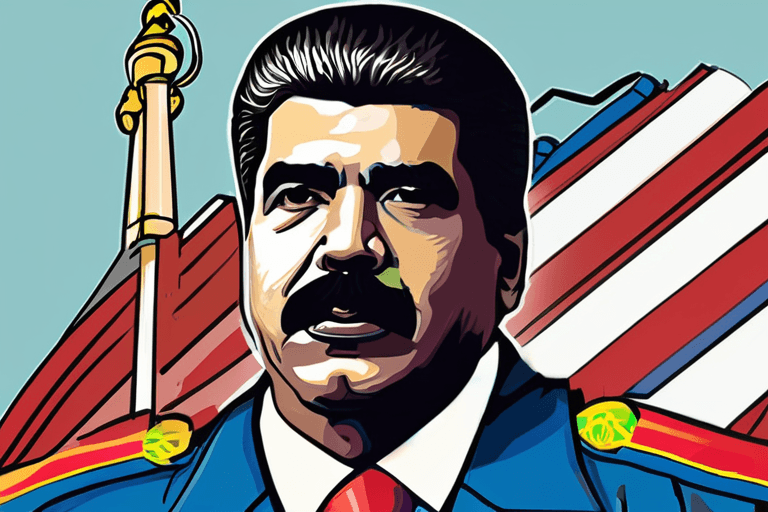
Nicolás Maduro, the president of Venezuela, declared himself a "prisoner of war" after entering a New York City courtroom on Monday for his arraignment. The dramatic scene unfolded as the sound of leg shackles preceded Maduro's entrance, where he addressed a courtroom packed with reporters and members of the public, stating he had been "kidnapped."
Judge Alvin Hellerstein, presiding over the 40-minute arraignment, asked Maduro to confirm his identity, prompting the Venezuelan leader to respond in Spanish, "I am, sir, Nicolás Maduro. I am president of the Republic of Venezuela and I am here kidnapped since January 3rd. I was captured at my home in Caracas, Venezuela." An interpreter then translated his words for the court. Judge Hellerstein quickly interrupted, stating that there would be a more appropriate time to address those claims.
Maduro's presence in a U.S. court stems from an ongoing international dispute regarding the legitimacy of his presidency and accusations of corruption and human rights abuses. The United States, along with numerous other countries, has recognized opposition leader Juan Guaidó as the interim president of Venezuela, citing irregularities in the 2018 presidential election that saw Maduro re-elected. This recognition reflects a broader geopolitical struggle for influence in the region, with countries like Russia and China continuing to support Maduro's government.
The situation in Venezuela has led to a severe economic crisis, marked by hyperinflation, shortages of food and medicine, and widespread emigration. Millions of Venezuelans have fled the country, seeking refuge in neighboring nations and beyond, creating a humanitarian crisis that has strained resources and sparked regional tensions. The charges against Maduro in the U.S. are likely related to alleged drug trafficking and money laundering, accusations that he has vehemently denied, claiming they are politically motivated. The arraignment of Maduro and his wife, Cilia Flores, marks a significant escalation in the ongoing crisis, raising questions about the future of Venezuela and its relationship with the international community. The next steps in the legal proceedings remain uncertain, but the case is expected to draw significant international attention, further highlighting the complex political and humanitarian challenges facing Venezuela.
















Discussion
Join the conversation
Be the first to comment