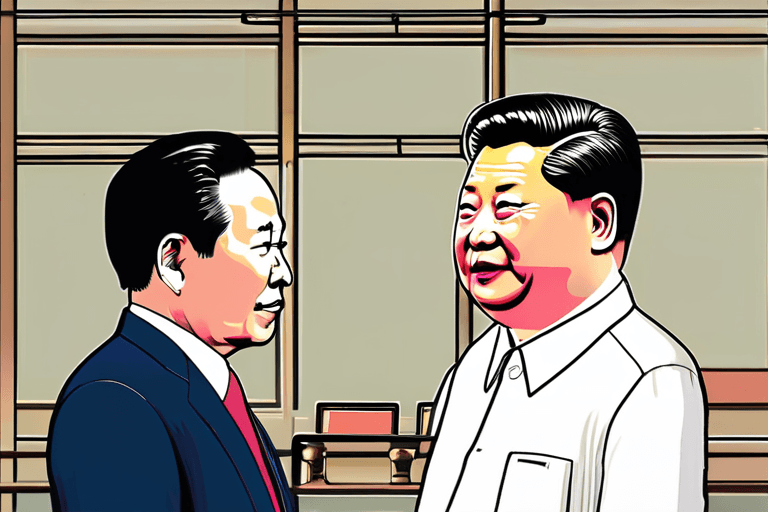
South Korean President Lee Jae Myung met with Chinese leader Xi Jinping in Beijing on Monday, seeking to reset strained relations with China, South Korea's largest trading partner. The meeting, the second summit between the two leaders since November when Xi visited South Korea, included discussions on regional security and China's unofficial ban on Korean pop culture.
Lee's visit to Beijing comes at a time of heightened regional tensions, particularly between China and Japan over Taiwan. Beijing has escalated its rhetoric against Japan following comments by Japanese Prime Minister Sanae Takaichi suggesting Tokyo could respond with its self-defense force in the event of a Chinese attack on Taiwan. This diplomatic row places South Korea, a key regional power and U.S. ally, in a delicate position.
Experts suggest Lee is seeking assurances from China that it will not use its economic power as a weapon in response to political tensions. China's economic influence over South Korea is substantial, making Seoul vulnerable to potential economic coercion. The unofficial ban on Korean pop culture, for example, has already had a significant impact on South Korean entertainment industries.
Like Japan, South Korea is a key ally of the United States, further complicating its relationship with China. The United States has been actively strengthening its alliances in the region to counter China's growing influence, and South Korea's alignment with Washington has been a source of friction with Beijing.
The meeting between Lee and Xi underscores the complex geopolitical dynamics in East Asia and the challenges South Korea faces in balancing its economic interests with its security alliances. The outcome of the summit and any agreements reached could have significant implications for regional stability and trade relations.
















Discussion
Join the conversation
Be the first to comment