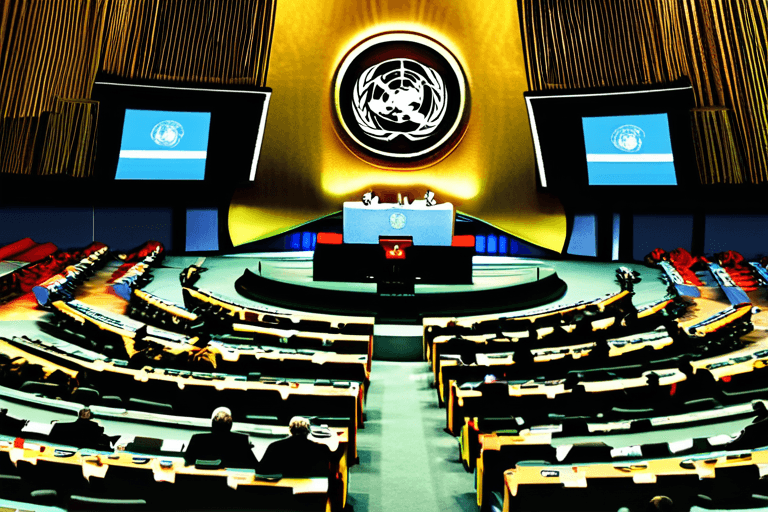
United Nations - The United States faced widespread condemnation at an emergency meeting of the United Nations Security Council on Monday for what many nations described as a "crime of aggression" in Venezuela. The meeting was convened following deadly U.S. strikes on Venezuelan territory and the capture of Venezuelan President Nicolás Maduro and his wife, Cilia Flores.
Brazil, China, Colombia, Cuba, Eritrea, Mexico, Russia, South Africa, and Spain were among the countries that denounced the actions taken by the Trump administration. Sérgio França Danese, the Brazilian ambassador to the UN, stated that the bombings and the capture of the Venezuelan president represented "an unacceptable line" crossed by the United States.
The U.S. Ambassador to the UN defended the actions, characterizing them not as an act of war, but as a law enforcement operation against an illegitimate leader. The ambassador argued that Maduro's regime had fostered corruption, human rights abuses, and economic collapse, thereby justifying the intervention.
Russia's representative to the UN accused the U.S. of a blatant violation of international law and a disregard for Venezuelan sovereignty. The representative described the events as a manifestation of the "Putinization of U.S. foreign policy," suggesting a shift towards aggressive unilateralism reminiscent of Russian foreign policy under Vladimir Putin.
The situation in Venezuela has been deteriorating for years, marked by political instability, economic hardship, and a humanitarian crisis. Maduro's government has faced accusations of authoritarianism and corruption, leading to widespread protests and international condemnation. The U.S. has long maintained a policy of non-recognition of Maduro's government, instead recognizing opposition leader Juan Guaidó as the legitimate interim president. However, this latest action marks a significant escalation in U.S. involvement.
The UN Security Council meeting highlighted the deep divisions within the international community regarding the situation in Venezuela and the role of external actors. While some nations emphasized the importance of upholding international law and respecting national sovereignty, others focused on the need to address human rights concerns and promote democracy in Venezuela. The long-term implications of the U.S. actions remain uncertain, but the event has undoubtedly heightened tensions in the region and raised concerns about the future of international relations.

















Discussion
Join the conversation
Be the first to comment