A new paradigm shift in artificial intelligence, termed "intelition," is poised to redefine how humans and AI collaborate, moving away from AI as a mere tool to a state of continuous co-production, according to Brian Mulconrey of Sureify Labs. This concept, introduced on January 4, 2026, describes the collaborative process where human and machine intelligence work together to perceive, decide, create, and act within a shared model.
Mulconrey argues that current systems treat AI as an external tool, invoked through prompts or integrated into agentic workflows. However, the future involves a continuous, real-time co-creation process where people and AI agents jointly shape decisions, logic, and actions. This evolution is driven by a unified ontology, as highlighted by Palantir CEO Alex Karp in a recent shareholder letter, suggesting that the value in the market will increasingly be tied to chips and ontology.
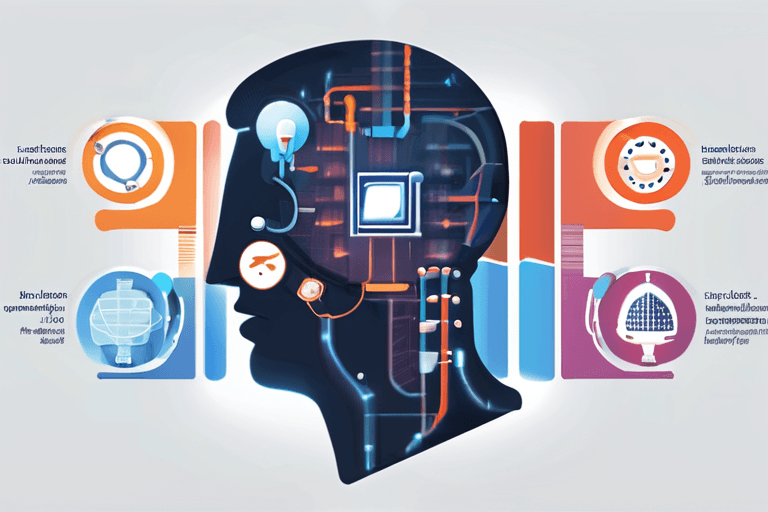
The term "intelition" seeks to capture the synergy that emerges when human and artificial intelligence converge, a concept for which current vocabulary lacks a precise descriptor. While "cognition" describes individual thought processes, "intelition" aims to define the collective intelligence arising from human-machine collaboration. This shift has significant implications for enterprise software, where AI is no longer a feature but an organizing principle.
Experts believe this transition will impact various sectors, from healthcare to finance, where real-time collaborative decision-making can enhance efficiency and accuracy. The development of unified ontologies is crucial for enabling this collaboration, providing a common framework for humans and AI to understand and interact with data.
The concept of intelition is still in its early stages, and its widespread adoption will require advancements in AI technology, data management, and human-machine interface design. However, the potential benefits of this new paradigm are substantial, promising a future where humans and AI work together seamlessly to solve complex problems and drive innovation.















Discussion
Join the conversation
Be the first to comment