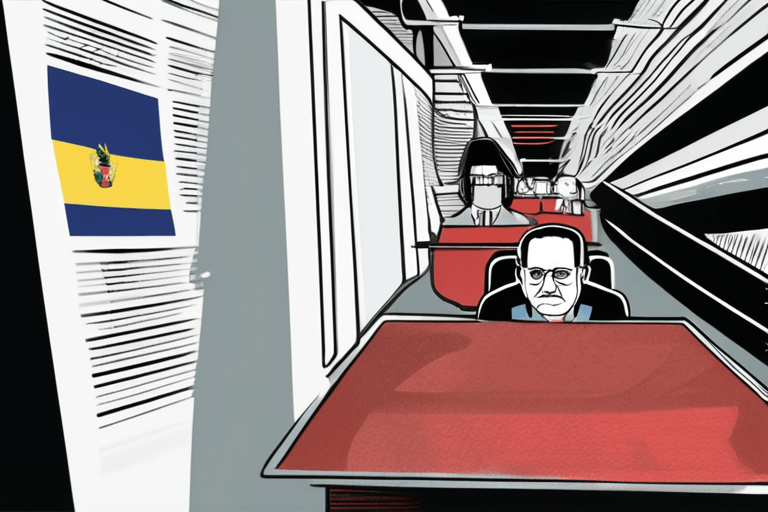
Delcy Rodríguez, Venezuela's new leader, is facing significant challenges in the wake of a U.S. military raid that resulted in the death of Nicolás Maduro. Rodríguez is tasked with solidifying her control over the Venezuelan government while simultaneously navigating demands from the United States.
The situation arose after a U.S. military operation aimed at capturing Maduro, the country's authoritarian leader for over a decade. The streets of major Venezuelan cities were largely quiet Sunday as citizens processed the events and the absence of Maduro. Some Venezuelans were seen at sites of American airstrikes, while others gathered at the Bello Monte morgue in Caracas to identify relatives killed in the military action.
In an effort to address the situation, Rodríguez issued a statement on social media expressing a willingness to work with the United States on a cooperative agenda. At the same time, she asserted Venezuela's right to sovereignty and freedom from external threats. "Venezuela has the right to self-determination," the statement read, "and we will pursue a path of cooperation based on mutual respect."
The U.S. military action and the subsequent change in leadership have created a complex political landscape. The United States has yet to formally respond to Rodríguez's offer of cooperation. The power vacuum left by Maduro's death has created uncertainty within the Venezuelan government.
The events mark a significant turning point for Venezuela, a country that has experienced political and economic turmoil in recent years. The future direction of the country remains uncertain as Rodríguez attempts to consolidate power and engage with the United States. The coming days and weeks will be crucial in determining the stability of Venezuela and its relationship with the international community.

















Discussion
Join the conversation
Be the first to comment