Drone warfare in Ukraine is evolving with the introduction of artificial intelligence, enabling drones to autonomously identify, track, and strike targets. These AI-powered drones represent a significant shift from traditional remotely piloted systems, raising complex questions about the future of warfare and the role of human control.
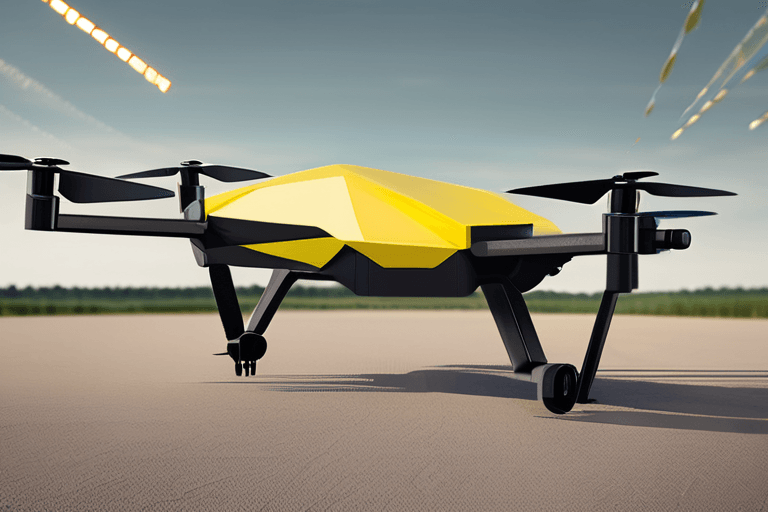
A recent example of this technology in action involved a Ukrainian drone pilot, identified only as Lipa, and his navigator, Bober, who were tasked with eliminating a Russian drone team operating near Borysivka, a village bordering Russia. Previous attempts to target the team using standard kamikaze drones had failed due to Russian jamming technology, which disrupts the radio communication between the pilot and the drone. Lipa's team was equipped with a Bumblebee drone, a specialized system provided by a venture led by Eric Schmidt, former CEO of Google.
The Bumblebee's key advantage lies in its AI capabilities. Unlike traditional drones that rely on constant human guidance, these drones can lock onto a target and autonomously pursue and engage it, even in environments with heavy electronic warfare interference. This autonomy is achieved through sophisticated algorithms that allow the drone to analyze visual data, identify pre-programmed targets, and navigate towards them without continuous communication with a human operator.
"The use of AI in drones changes the dynamics of the battlefield," said Peter Singer, a strategist at New America, a think tank. "It allows for faster reaction times and the ability to operate in areas where communication is degraded or denied."
The development and deployment of AI-powered drones in Ukraine highlight a growing trend in military technology. While proponents argue that these systems can increase efficiency and reduce risk to human soldiers, critics raise concerns about the potential for unintended consequences and the ethical implications of delegating lethal decisions to machines.
One concern is the potential for algorithmic bias. If the AI is trained on biased data, it could lead to misidentification of targets or disproportionate harm to certain populations. Another concern is the lack of accountability in the event of an error. Determining responsibility when an autonomous drone makes a mistake is a complex legal and ethical challenge.
The use of AI in drones also raises the specter of autonomous weapons systems, often referred to as "killer robots." These systems would be able to independently select and engage targets without any human intervention. Many experts and organizations are calling for a ban on such weapons, arguing that they are inherently dangerous and could lead to an arms race.
"We need to have a serious conversation about the limits of AI in warfare," said Mary Wareham, advocacy director of the Arms Division at Human Rights Watch. "The idea of delegating life-and-death decisions to machines is deeply troubling."
The situation in Ukraine is accelerating the development and deployment of AI-powered drones. As both sides seek to gain an advantage on the battlefield, the use of these technologies is likely to increase, further blurring the lines between human and machine control in warfare. The long-term implications of this trend are still uncertain, but it is clear that AI is poised to play an increasingly significant role in shaping the future of conflict.
















Discussion
Join the conversation
Be the first to comment