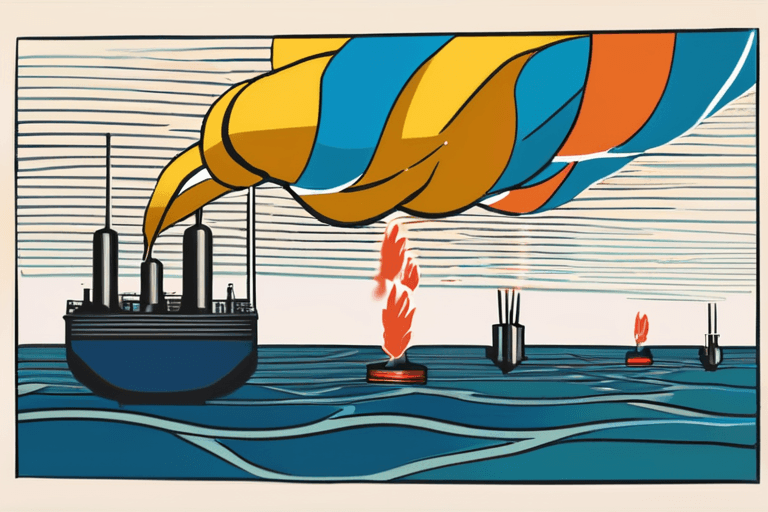
Imagine a scenario where the U.S. government, leveraging its financial might, steps in to revive a struggling oil industry in a foreign nation. This isn't a scene from a geopolitical thriller, but a potential reality as President Trump floated the idea of the U.S. subsidizing American energy companies to rebuild Venezuela's oil sector. The proposal, revealed in an NBC News interview, has ignited a debate about the role of government intervention, the complexities of international relations, and the strategic importance of oil in the 21st century.
Venezuela, once a thriving oil-producing nation, has seen its industry crumble under years of mismanagement and political turmoil. Nicolás Maduro's regime, now challenged by U.S.-backed opposition, has presided over a dramatic decline in oil production, crippling the country's economy and leading to widespread hardship. The U.S., viewing Venezuela's vast oil reserves as crucial to its strategic interests, has been actively seeking ways to restore stability and unlock the country's energy potential.
Trump's suggestion of reimbursing U.S. firms for their investments in Venezuela's oil industry is a bold move, laden with both opportunities and risks. He envisions a rapid turnaround, stating, "I think we can do it in less time than that, but it'll be a lot of money. A tremendous amount of money will have to be spent and the oil companies will spend it, and then they'll get reimbursed by us or through revenue." This ambitious timeline, however, clashes with the more cautious estimates of energy experts, who cite the extensive damage to infrastructure, the need for significant security improvements, and the lingering political instability as major hurdles.
The silence from major oil companies like Exxon Mobil, Chevron, and ConocoPhillips speaks volumes. While the prospect of tapping into Venezuela's vast reserves is undoubtedly enticing, these companies are likely weighing the potential rewards against the considerable risks involved. The question of who controls the revenues generated during this interim period remains unanswered, adding another layer of uncertainty to the equation.
The implications of this potential intervention extend far beyond the realm of economics. It raises questions about the ethics of foreign intervention, the balance between national interests and global responsibility, and the long-term consequences of meddling in the affairs of other nations. While the U.S. may see Venezuela's oil as a strategic asset, others may view this as a form of neo-colonialism, further exacerbating tensions in an already volatile region.
The path forward remains unclear. Whether Trump's vision will materialize depends on a complex interplay of political will, economic feasibility, and the willingness of energy companies to take a leap of faith. One thing is certain: the future of Venezuela's oil industry, and the potential for U.S. involvement, will continue to be a closely watched saga on the global stage.















Discussion
Join the conversation
Be the first to comment