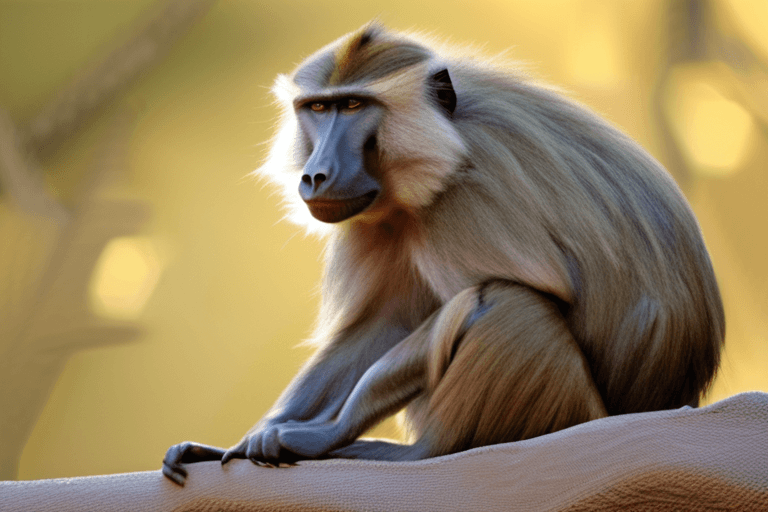
A primatologist in Mozambique believes studying baboons offers crucial insights into human evolution. Rassina Farassi, working with the Paleo-Primate Project (PPP) in Gorongosa National Park, observes grey-footed Chacma baboons. She sees their behavior as a window into understanding our hominid ancestors.
Farassi began working with the PPP in 2017. The park's unexplored fossil sites, discovered as recently as 2016, provide vital clues. The PPP combines the study of fossils and living primates. In October 2025, Farassi was photographed holding an Arsinoitherium skull, an extinct herbivore. This discovery suggests Gorongosa was once part of East Africa's coastal forests.
Farassi's work could reshape our understanding of early human development. By studying baboon social structures and adaptations, researchers can infer behaviors of early hominids. The Paleo-Primate Project continues its work in Gorongosa National Park. Future excavations and primate studies promise further revelations about human origins.


















Discussion
Join the conversation
Be the first to comment