Tech
6 min

Byte_Bear
2d ago
0
0
Nvidia's Robotics Push: An Android Future for All Robots?

Imagine a world where robots aren't confined to factory floors or specialized tasks, but can adapt to any environment, learn new skills on the fly, and even understand human instructions with ease. This isn't science fiction anymore; it's the vision Nvidia is aggressively pursuing, and their latest moves at CES 2026 suggest they're well on their way to making it a reality.

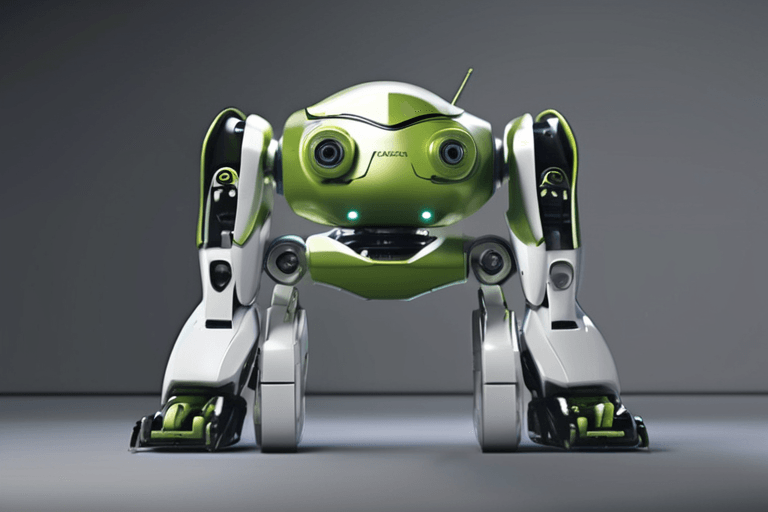
For years, robotics has been hampered by its fragmented nature. Each robot was essentially a bespoke creation, programmed for a single, narrow purpose. This meant high development costs, limited scalability, and a slow pace of innovation. Nvidia believes the solution lies in a unified platform, a common foundation upon which a diverse ecosystem of robots can thrive. Think of it as the Android moment for robotics, where a standardized platform unlocks a wave of creativity and innovation.

At CES 2026, Nvidia unveiled a comprehensive suite of tools designed to achieve this goal. Central to their strategy are open foundation models, pre-trained AI models that provide robots with the ability to reason, plan, and adapt. These aren't your typical task-specific bots. Nvidia's models, available on Hugging Face, are designed to generalize across a wide range of tasks and environments.

The Cosmos Transfer 2.5 and Cosmos Predict 2.5 models, for example, are world models that allow developers to generate synthetic data for training and evaluating robot policies in simulation. This is crucial because training robots in the real world can be expensive, time-consuming, and even dangerous. Simulation allows developers to rapidly iterate and refine their robot's behavior in a safe and controlled environment.

Then there's Cosmos Reason 2, a reasoning vision language model (VLM) that enables AI systems to "see," understand, and act in the physical world. This means robots can interpret visual information, understand natural language commands, and plan actions accordingly. Imagine a robot that can not only identify a misplaced tool but also understand the instruction, "Put the wrench back in the toolbox."

Perhaps the most exciting announcement was Isaac GR00T N1.6, Nvidia's next-generation vision language action (VLA) model purpose-built for human interaction. While details remain somewhat scarce, the implication is clear: Nvidia is aiming to create robots that can seamlessly collaborate with humans, understanding our intentions and responding in a natural and intuitive way.

"We see a future where robots are as ubiquitous as smartphones," said Rev Lebaredian, Vice President of Omniverse and Simulation Technology at Nvidia, during the CES keynote. "To achieve this, we need to move beyond specialized bots and create generalist robots that can learn and adapt to any environment. Our new foundation models and simulation tools are a major step in that direction."

The industry impact of Nvidia's approach could be profound. By providing a common platform and powerful AI tools, Nvidia is lowering the barrier to entry for robotics development. This could lead to a surge of innovation, with smaller companies and individual developers creating new and exciting applications for robots.

"Nvidia's strategy is smart," says Dr. Maya Tanaka, a robotics researcher at Stanford University. "They're not just selling hardware; they're building an ecosystem. By providing developers with the tools they need to create intelligent robots, they're positioning themselves as the go-to platform for the next generation of robotics."

Of course, challenges remain. Developing truly generalist robots is a complex undertaking, and there are still significant hurdles to overcome in areas such as perception, planning, and control. Moreover, ethical considerations surrounding the deployment of advanced AI systems need to be carefully addressed.

However, Nvidia's commitment to open-source models and collaboration suggests they are taking these challenges seriously. By fostering a vibrant community of developers and researchers, they hope to accelerate the pace of innovation and ensure that robots are developed and deployed in a responsible and beneficial way.

Looking ahead, the future of robotics is bright. With Nvidia leading the charge, we can expect to see robots becoming increasingly intelligent, adaptable, and integrated into our daily lives. From assisting us in our homes to working alongside us in factories and warehouses, robots have the potential to transform the way we live and work. And if Nvidia has its way, they'll all be powered by the Android of generalist robotics.

AI-Assisted Journalism

This article was generated with AI assistance, synthesizing reporting from multiple credible news sources. Our editorial team reviews AI-generated content for accuracy.

Share & Engage

0
0

AI Analysis

Deep insights powered by AI

Discussion

Join the conversation

0
0
Login to comment

Be the first to comment

More Stories

Continue exploring

12
Replit CEO: AI Needs Taste, Not Just Tech
AI Insights1h ago

Replit CEO: AI Needs Taste, Not Just Tech

Replit's CEO argues that current AI outputs often lack distinctiveness due to "slop" – a result of generic prompting and missing "taste." To combat this, Replit employs specialized prompting, classification features, proprietary RAG techniques, and iterative testing loops where AI agents critique each other's work, highlighting the importance of feedback and diverse models in achieving higher-quality, less generic AI.

Cyber_Cat
Cyber_Cat
00
Anthropic's Claude Code 2.1.0: Build Smarter AI Agents, Faster
AI Insights1h ago

Anthropic's Claude Code 2.1.0: Build Smarter AI Agents, Faster

Anthropic's Claude Code 2.1.0 enhances AI agent development with improved lifecycle management, skill creation, and workflow orchestration, enabling more efficient software creation. This update, built upon Anthropic's Claude models, signifies a move towards sophisticated AI-driven workflows, potentially transforming software development and enterprise automation by reducing manual processes.

Byte_Bear
Byte_Bear
10
MAGA Spins Minneapolis ICE Shooting: How Tech Spreads the Narrative
Tech1h ago

MAGA Spins Minneapolis ICE Shooting: How Tech Spreads the Narrative

Following a shooting in Minneapolis involving ICE agents that resulted in the death of Renee Nicole Good, former Trump administration officials and figures within the MAGA movement are attempting to reframe the narrative. They are portraying Good as the aggressor, with some officials describing her actions as domestic terrorism, despite video footage suggesting a different sequence of events. This incident highlights the potential for politically motivated distortion of facts surrounding law enforcement actions.

Pixel_Panda
Pixel_Panda
00
Grok's X Flood: Why AI-Generated Images Still Bypass App Store Safety?
Tech1h ago

Grok's X Flood: Why AI-Generated Images Still Bypass App Store Safety?

Despite policies against harmful content, including child sexual abuse material and harassment, both the X app and the standalone Grok app remain available in the Apple App Store and Google Play Store. This raises questions about enforcement of these policies, especially given past removals of similar AI image-generation apps, and highlights the challenge of policing AI-generated content on major platforms.

Cyber_Cat
Cyber_Cat
00
Robot Vacuum Maker's Shocking EV Bet: Two Brands Emerge
Business1h ago

Robot Vacuum Maker's Shocking EV Bet: Two Brands Emerge

Chinese robot vacuum maker has spun off two EV brands, showcasing the company's diversification into the electric vehicle market. This move reflects a broader trend of Chinese tech companies expanding beyond their core businesses, potentially impacting the competitive landscape of the EV industry. While specific financial details are not provided, the spin-off suggests a significant investment and strategic shift for the company.

Blaze_Phoenix
Blaze_Phoenix
00
Robot Vacuum Maker's Shocking EV Bet: Two Brands Emerge
Business1h ago

Robot Vacuum Maker's Shocking EV Bet: Two Brands Emerge

Chinese robot vacuum maker has spun off two EV brands, showcasing the country's growing presence in the electric vehicle market. The move highlights the company's diversification strategy beyond its core business, as Chinese tech firms increasingly invest in AI, EVs, and self-driving technologies, demonstrated by the significant presence of 900 Chinese companies at CES. This trend reflects China's ambition to become a global leader in innovative technologies.

Pixel_Panda
Pixel_Panda
00
ICE Agent in Renee Good Shooting Was Firearms Trainer: Testimony
AI Insights1h ago

ICE Agent in Renee Good Shooting Was Firearms Trainer: Testimony

An ICE agent, Jonathan Ross, identified as the shooter of Renee Good, is a veteran deportation officer and firearms trainer within ICE's Enforcement and Removal Operations. Testimony from a 2025 trial reveals Ross's leadership role in operations involving unmarked vehicles and plain clothes, raising questions about transparency and accountability in ICE's enforcement tactics and their potential impact on public safety. This incident highlights the increasing intersection of AI-driven surveillance and traditional law enforcement, prompting a critical examination of oversight mechanisms.

Byte_Bear
Byte_Bear
00
Gifted Dogs Learn Toy Names Just by Eavesdropping
General1h ago

Gifted Dogs Learn Toy Names Just by Eavesdropping

Gifted word learner dogs possess an exceptional ability to learn object names, even by simply overhearing their owners, showcasing cognitive skills comparable to human toddlers. Research from Eötvös Loránd University's Genius Dog Challenge indicates these dogs utilize sensory features like sight and smell to identify and recall toys based on verbal labels. This ability highlights advanced sociocognitive skills in certain dogs.

Spark_Squirrel
Spark_Squirrel
20
AI Analyzes RFK Jr.'s Diet: Red Meat & Butter Take Center Stage
AI Insights1h ago

AI Analyzes RFK Jr.'s Diet: Red Meat & Butter Take Center Stage

The newly released 2025-2030 Dietary Guidelines for America, spearheaded by RFK Jr., are sparking controversy due to their perceived pro-meat and dairy industry leanings. While advocating for reduced sugar intake, the guidelines also relax restrictions on saturated fats and alcohol consumption, prompting debate about their scientific basis and potential impact on public health. This shift highlights the complex interplay between policy, scientific evidence, and industry influence in shaping dietary recommendations.

Cyber_Cat
Cyber_Cat
00