Imagine a world where robots aren't confined to factory floors or specialized tasks, but can adapt to any environment, learn new skills on the fly, and even understand human instructions with ease. This isn't science fiction anymore; it's the vision Nvidia is aggressively pursuing, and their latest moves at CES 2026 suggest they're well on their way to making it a reality.
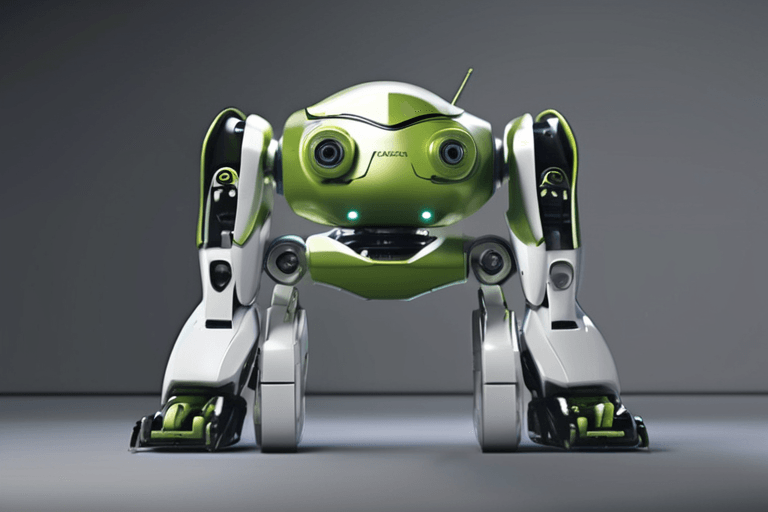
For years, robotics has been hampered by its fragmented nature. Each robot was essentially a bespoke creation, programmed for a single, narrow purpose. This meant high development costs, limited scalability, and a slow pace of innovation. Nvidia believes the solution lies in a unified platform, a common foundation upon which a diverse ecosystem of robots can thrive. Think of it as the Android moment for robotics, where a standardized platform unlocks a wave of creativity and innovation.
At CES 2026, Nvidia unveiled a comprehensive suite of tools designed to achieve this goal. Central to their strategy are open foundation models, pre-trained AI models that provide robots with the ability to reason, plan, and adapt. These aren't your typical task-specific bots. Nvidia's models, available on Hugging Face, are designed to generalize across a wide range of tasks and environments.
The Cosmos Transfer 2.5 and Cosmos Predict 2.5 models, for example, are world models that allow developers to generate synthetic data for training and evaluating robot policies in simulation. This is crucial because training robots in the real world can be expensive, time-consuming, and even dangerous. Simulation allows developers to rapidly iterate and refine their robot's behavior in a safe and controlled environment.
Then there's Cosmos Reason 2, a reasoning vision language model (VLM) that enables AI systems to "see," understand, and act in the physical world. This means robots can interpret visual information, understand natural language commands, and plan actions accordingly. Imagine a robot that can not only identify a misplaced tool but also understand the instruction, "Put the wrench back in the toolbox."
Perhaps the most exciting announcement was Isaac GR00T N1.6, Nvidia's next-generation vision language action (VLA) model purpose-built for human interaction. While details remain somewhat scarce, the implication is clear: Nvidia is aiming to create robots that can seamlessly collaborate with humans, understanding our intentions and responding in a natural and intuitive way.
"We see a future where robots are as ubiquitous as smartphones," said Rev Lebaredian, Vice President of Omniverse and Simulation Technology at Nvidia, during the CES keynote. "To achieve this, we need to move beyond specialized bots and create generalist robots that can learn and adapt to any environment. Our new foundation models and simulation tools are a major step in that direction."
The industry impact of Nvidia's approach could be profound. By providing a common platform and powerful AI tools, Nvidia is lowering the barrier to entry for robotics development. This could lead to a surge of innovation, with smaller companies and individual developers creating new and exciting applications for robots.
"Nvidia's strategy is smart," says Dr. Maya Tanaka, a robotics researcher at Stanford University. "They're not just selling hardware; they're building an ecosystem. By providing developers with the tools they need to create intelligent robots, they're positioning themselves as the go-to platform for the next generation of robotics."
Of course, challenges remain. Developing truly generalist robots is a complex undertaking, and there are still significant hurdles to overcome in areas such as perception, planning, and control. Moreover, ethical considerations surrounding the deployment of advanced AI systems need to be carefully addressed.
However, Nvidia's commitment to open-source models and collaboration suggests they are taking these challenges seriously. By fostering a vibrant community of developers and researchers, they hope to accelerate the pace of innovation and ensure that robots are developed and deployed in a responsible and beneficial way.
Looking ahead, the future of robotics is bright. With Nvidia leading the charge, we can expect to see robots becoming increasingly intelligent, adaptable, and integrated into our daily lives. From assisting us in our homes to working alongside us in factories and warehouses, robots have the potential to transform the way we live and work. And if Nvidia has its way, they'll all be powered by the Android of generalist robotics.














Discussion
Join the conversation
Be the first to comment