Nicolás Maduro, the former president of Venezuela, was escorted by federal agents to a federal courthouse in Manhattan on January 5, 2026, following his capture and extradition to the United States. The move has triggered international repercussions, prompting a meeting of the UN Security Council at the request of Colombia to assess the legality of President Donald Trump's actions.
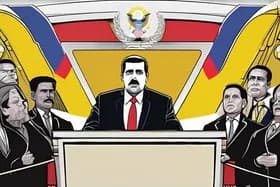
Maduro's son, Venezuelan congressman Nicolás Maduro Guerra, condemned the capture in a speech at Venezuela's legislative palace. "If we normalize the kidnapping of a head of state, no country is safe," Maduro Guerra stated. "Today, it's Venezuela. Tomorrow, it could be any nation that refuses to submit."
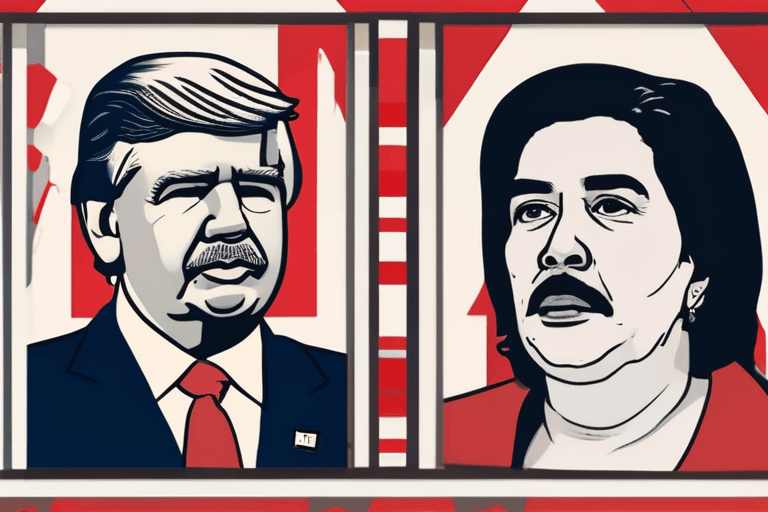
The situation escalated further when President Trump, speaking to reporters aboard Air Force One, threatened Colombia's leader. "Colombia is very sick too," Trump said. "Run by a sick man who likes making cocaine and selling it to the United States. And he's not going to be doing it."
These events are unfolding against a backdrop of heightened tensions in Latin America, with some analysts suggesting that the U.S. actions are aimed at consolidating power and installing allies in the region. Peter Balonon-Rosen and Noel King, in a recent podcast, argued that the situation is "really about bringing Latin America, all of Latin America, to heel and bringing Trump allies to power."
The U.S. government has not yet released an official statement detailing the specific charges against Maduro, but it is widely speculated that they relate to alleged drug trafficking and corruption. The extradition process itself likely involved complex legal and diplomatic maneuvering, potentially utilizing AI-powered tools for analyzing international law and predicting potential responses from various nations. Such AI applications are increasingly being used in international relations to assess risks and formulate strategies.
The capture and extradition of Maduro represent a significant escalation of U.S. involvement in Venezuelan affairs, which have been fraught with political and economic instability for years. The situation is being closely monitored by governments and international organizations worldwide, with concerns mounting about the potential for further destabilization in the region. The UN Security Council's deliberations are expected to continue in the coming days, as member states grapple with the legal and ethical implications of the U.S. actions.












Discussion
Join the conversation
Be the first to comment