Six European allies have voiced their support for Denmark following renewed assertions by the United States regarding the need to control Greenland. The joint statement from the leaders of the UK, France, Germany, Italy, Poland, Spain, and Denmark affirmed that "Greenland belongs to its people, and only Denmark and Greenland can decide on matters concerning their relations."
The diplomatic backing comes after U.S. President Donald Trump stated on Sunday that the U.S. "needed" Greenland, a semi-autonomous territory belonging to Denmark, for national security reasons. Trump has not dismissed the possibility of using force to acquire the territory, prompting a strong response from Danish Prime Minister Mette Frederiksen, who warned on Monday that a U.S. attack would signify the end of NATO.
NATO, the North Atlantic Treaty Organization, is a transatlantic military alliance where member states are obligated to assist each other in the event of external aggression. The alliance, formed in 1949, was initially designed to counter the threat posed by the Soviet Union during the Cold War. Its mutual defense clause, Article 5, has only been invoked once, following the September 11th attacks on the United States.
The renewed interest in Greenland's strategic importance follows a recent U.S. military intervention in Venezuela, where elite troops reportedly entered the country to apprehend President Nicolás Maduro and bring him to New York to face charges related to drugs and weapons. This action has raised concerns among some international observers about the potential for unilateral action by the U.S. government.
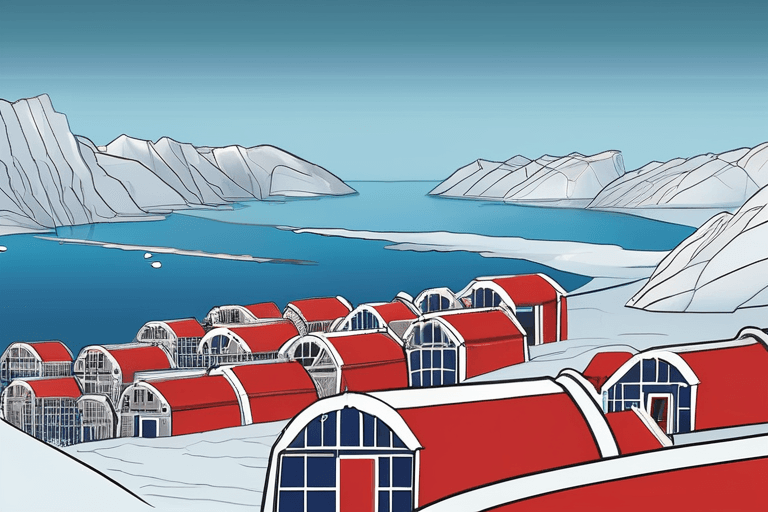
Greenland, geographically situated between the Arctic and Atlantic Oceans, holds significant geopolitical value due to its natural resources and strategic location. The island is rich in minerals, including rare earth elements, which are crucial for modern technologies. Its location also makes it a key area for military monitoring and potential control of Arctic shipping routes, which are becoming increasingly accessible due to climate change.
The relationship between Denmark and Greenland is complex, with Greenland having its own parliament and government, managing most domestic affairs. However, Denmark retains control over foreign policy, defense, and financial matters. The idea of Greenland being sold or annexed by another country is deeply unpopular among Greenlanders, who value their autonomy and cultural identity. The current status of the situation remains tense, with no immediate resolution in sight. Further diplomatic discussions are expected to take place in the coming weeks to address the concerns raised by the U.S. position and to reaffirm the importance of international cooperation and respect for sovereignty.

















Discussion
Join the conversation
Be the first to comment