Just hours before American commandos seized Venezuelan President Nicolás Maduro, a high-ranking Chinese official met with him in Caracas, signaling Beijing's support for a key ally in the Western Hemisphere. The subsequent U.S. operation to capture Maduro sent a clear signal about the limits of China's influence in a region traditionally considered by Washington as its domain.
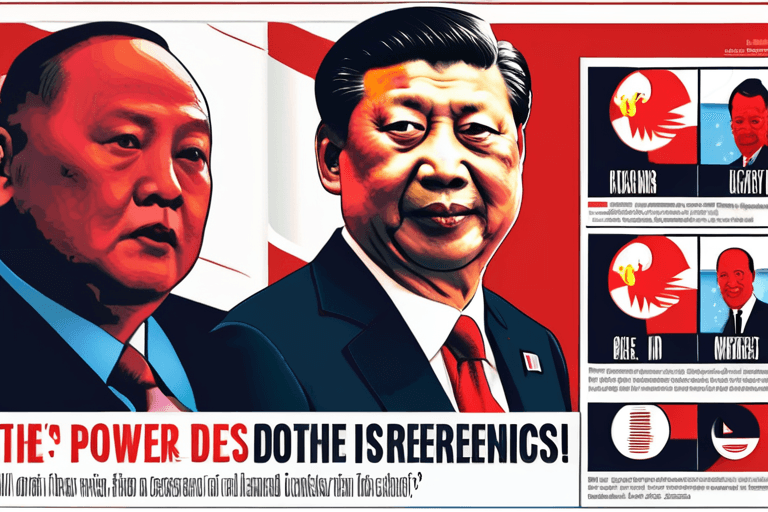
The incident in Venezuela highlights a broader geopolitical trend that analysts say ultimately reinforces President Xi Jinping's vision of China's role in Asia. This vision, they argue, is based on the principle that powerful nations exert influence in their respective regions, often overshadowing shared international rules. The White House has characterized the Maduro operation as an updated version of the Monroe Doctrine, dubbed by President Trump as the "Donroe Doctrine." This concept envisions a world divided into spheres of influence, with the United States dominating the Western Hemisphere and China asserting its primacy in the Asia-Pacific region.
The implications of such a world order are significant. It suggests a move away from a rules-based international system toward a system where power dictates outcomes. This shift could undermine international institutions and agreements, potentially leading to increased regional tensions and conflicts. The concept of spheres of influence has historical precedents, dating back to the 19th century when European powers carved up Africa and Asia. However, in the 21st century, with increased global interconnectedness and the rise of new technologies, the implications are far more complex.
One key aspect of this geopolitical shift is the role of artificial intelligence (AI). AI is increasingly being used for military and surveillance purposes, potentially exacerbating power imbalances between nations. For example, AI-powered surveillance systems could allow powerful countries to monitor and control their spheres of influence more effectively. Furthermore, AI is being used to develop autonomous weapons systems, which could lower the threshold for conflict and increase the risk of escalation.
The development of AI also raises ethical concerns. AI algorithms are trained on data, and if that data reflects existing biases, the algorithms will perpetuate those biases. This could lead to discriminatory outcomes in areas such as law enforcement and criminal justice. The use of AI in warfare also raises questions about accountability and the potential for unintended consequences.
The situation in Venezuela underscores the challenges facing China as it seeks to expand its influence in the Western Hemisphere. Despite decades of investment and billions of dollars in loans, China risks losing ground in the region due to the assertive actions of the United States. However, the incident also highlights the broader trend of great power competition and the potential for a world order based on spheres of influence. The future of international relations will likely be shaped by the interplay between these competing forces and the role of emerging technologies like AI.
















Discussion
Join the conversation
Be the first to comment