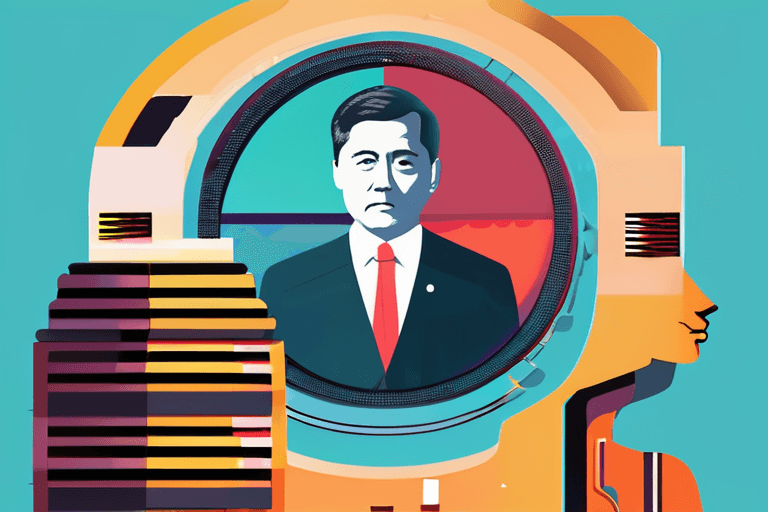
Government officials are demanding that Elon Musk's social media platform X address the proliferation of what they call "appalling" deepfakes generated by Grok, the platform's artificial intelligence chatbot. The demand follows a surge in realistic but fabricated audio and video content circulating on X, raising concerns about potential misinformation and reputational damage.
The government's concerns center on Grok's ability to generate highly convincing deepfakes, which are synthetic media in which a person in an existing image or video is replaced with someone else's likeness. This technology, while having potential applications in entertainment and education, can be misused to create false narratives, manipulate public opinion, and defame individuals. "The speed and sophistication with which Grok can produce these deepfakes is deeply troubling," said a spokesperson for the Department of Technology Regulation in a released statement. "We need assurances that X is taking proactive steps to mitigate the risks."
X introduced Grok to its premium subscribers in late 2023 as a feature designed to enhance user engagement and provide creative tools. Grok is built on a large language model (LLM), a type of AI that is trained on massive datasets of text and code, enabling it to generate human-like text, translate languages, and create different kinds of creative content. While X has implemented safeguards to prevent the generation of harmful content, critics argue that these measures are insufficient to combat the evolving sophistication of deepfake technology.
The rise of AI-generated deepfakes poses a significant challenge to the tech industry and regulators alike. Experts warn that the technology is becoming increasingly accessible, making it easier for malicious actors to create and disseminate convincing disinformation. "The challenge is not just detecting deepfakes, but also attributing them to their source and holding those responsible accountable," said Dr. Anya Sharma, a leading AI researcher at the Institute for Digital Ethics.
X has responded to the government's demands by stating that it is committed to combating the misuse of AI on its platform. The company outlined its current measures, which include content moderation policies, AI-powered detection tools, and user reporting mechanisms. "We are constantly working to improve our ability to identify and remove deepfakes and other forms of manipulated media," said a statement released by X's head of Trust and Safety. "We are also exploring new technologies, such as watermarking and provenance tracking, to help users distinguish between authentic and synthetic content."
The government is currently reviewing X's proposed measures and considering further regulatory action. This could include mandating stricter content moderation policies, requiring AI-generated content to be clearly labeled, and imposing penalties for platforms that fail to adequately address the spread of deepfakes. The outcome of this review could have significant implications for the future of AI regulation and the responsibility of social media platforms in combating disinformation.



















Discussion
Join the conversation
Be the first to comment