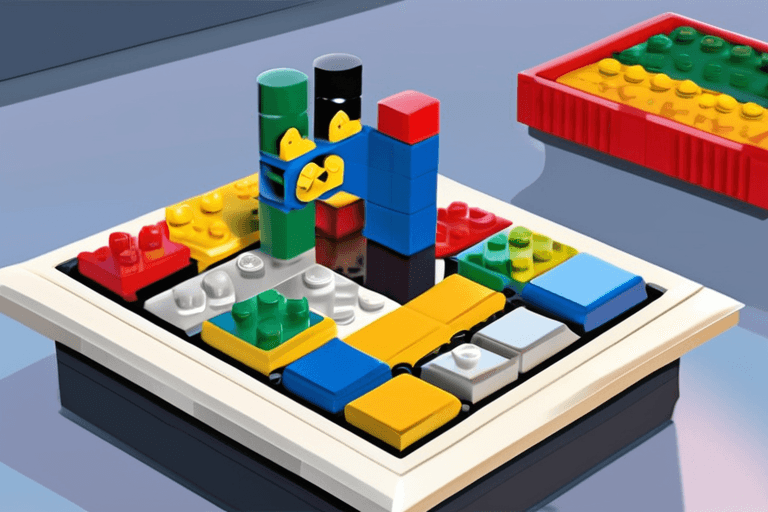
Lego unveiled its new "Smart Bricks" at the annual Toy Fair in Nuremberg, Germany, on Wednesday, integrating advanced sensor technology and programmable microcontrollers directly into the iconic building blocks. The move, designed to enhance play experiences with interactive elements, has sparked debate among child development experts who expressed concerns about the potential impact on traditional creative play.
The Smart Bricks, developed over three years at Lego's Innovation Lab in Billund, Denmark, incorporate Bluetooth connectivity, accelerometer and gyroscope sensors, and miniature LED displays. These features allow children to program their Lego creations to respond to movement, light, and sound, opening up possibilities for interactive storytelling and robotic applications. According to a Lego press release, the bricks are compatible with existing Lego sets, aiming for seamless integration into the current product ecosystem. The company plans to release a dedicated coding app for both iOS and Android devices, enabling children to program the bricks using a visual, block-based interface.
"We believe Smart Bricks will empower children to become creators and inventors, bridging the gap between physical play and digital literacy," said Lars Silberbauer, Lego's Chief Marketing Officer, during the product launch. Silberbauer emphasized the educational benefits, highlighting the potential for children to learn basic coding concepts and problem-solving skills through hands-on interaction.
However, some child development experts voiced reservations about the potential impact on unstructured, imaginative play. Dr. Anya Sharma, a developmental psychologist at the University of Oxford, argued that the introduction of technology could stifle creativity. "One of the great strengths of Lego has always been its open-ended nature, allowing children to build and imagine anything they can dream up," Sharma said. "Adding pre-programmed functions and digital interfaces risks limiting that freedom and potentially shifting the focus from creative exploration to following instructions."
The debate surrounding Smart Bricks reflects a broader discussion within the toy industry about the role of technology in children's play. While many companies are incorporating digital elements to engage children in an increasingly tech-driven world, concerns remain about screen time, data privacy, and the potential displacement of traditional play activities.
Lego's Smart Bricks are scheduled for release in the fall of 2024, with a suggested retail price of $299 for a starter kit containing a selection of Smart Bricks, connector cables, and access to the coding app. The company plans to gather feedback from educators and parents during beta testing programs in the coming months to refine the product and address concerns raised by experts. Lego also announced partnerships with several educational institutions to develop curriculum materials that integrate Smart Bricks into STEM learning programs.



















Discussion
Join the conversation
Be the first to comment