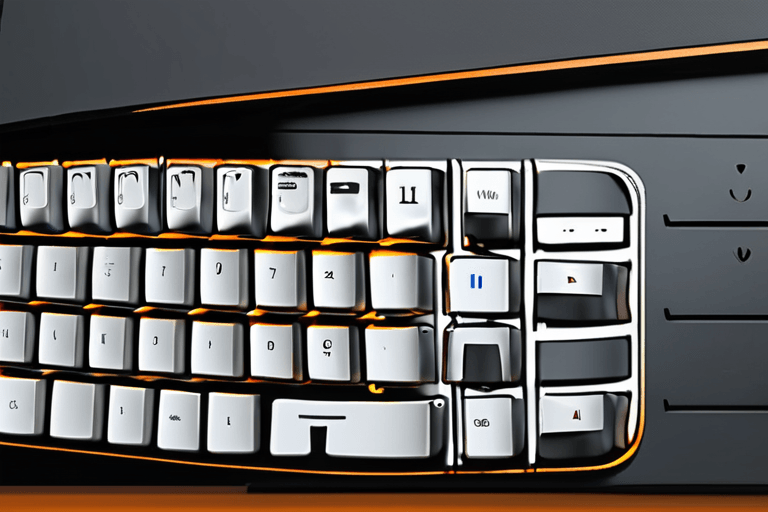
HP announced the EliteBoard G1a, a Windows 11 PC integrated into a functioning membrane keyboard, positioning it as a more accessible alternative to existing keyboard-based computers. This new product harkens back to the Commodore 64, which popularized the concept in the 1980s, while also addressing the current market largely dominated by Raspberry Pi solutions.
The EliteBoard G1a aims to offer a user-friendly experience compared to the Raspberry Pi 400 and the newer Pi 500, which, while cost-effective, primarily cater to hobbyists, DIY enthusiasts, and Linux users. The Raspberry Pi 400, released in 2019, houses a Raspberry Pi 4 single-board computer within a keyboard case, providing USB, HDMI, and Ethernet ports, along with a GPIO header and the Raspberry Pi OS Linux distribution. The Pi 500, an upgraded version, features a more powerful Pi 5 with a quad-core, 64-bit Arm Cortex-A76 processor and NVMe SSD storage within a low-profile mechanical keyboard.
While specific technical details of the HP EliteBoard G1a remain limited, the company is emphasizing its ease of use and compatibility with the Windows 11 operating system. This approach contrasts with the Raspberry Pi's focus on open-source software and hardware customization. The EliteBoard G1a is designed to appeal to a broader audience seeking a simple, all-in-one computing solution without the need for technical expertise.
The industry impact of the EliteBoard G1a will depend on its pricing, performance, and availability. If HP can deliver a reliable Windows 11 experience at a competitive price point, it could attract users who are intimidated by the technical aspects of Raspberry Pi-based systems. Further details regarding the EliteBoard G1a's specifications, release date, and pricing are expected to be announced in the coming months.



















Discussion
Join the conversation
Be the first to comment