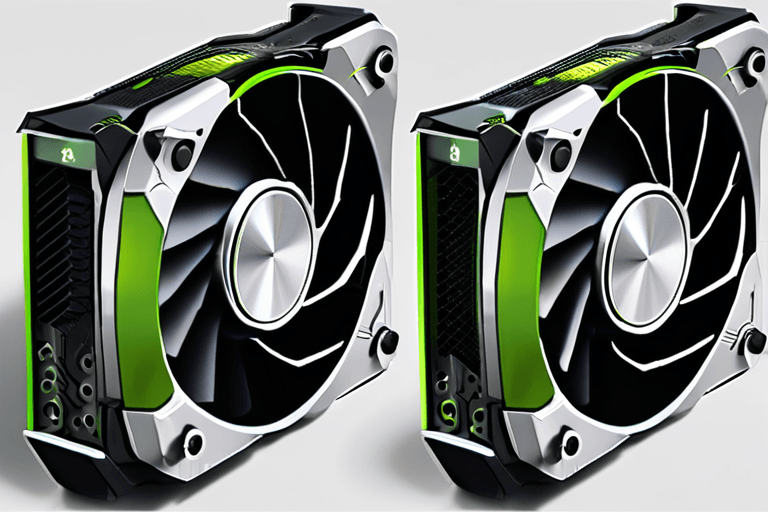
Nvidia's recent strategic shift signals a significant recalibration of its focus, prioritizing software enhancements over the introduction of new GeForce Super GPUs at CES. This move, a departure from the company's established pattern, underscores the increasing importance of software in driving value and maintaining competitiveness in the graphics card market.
The decision to forgo new hardware announcements at CES reflects Nvidia's confidence in its existing product line and its strategic emphasis on software-driven improvements. CEO Jensen Huang's keynote, largely dedicated to the company's burgeoning AI business, further emphasized this shift. Gaming-related announcements were relegated to a separate video, highlighting the company's current priorities. The most significant announcement was DLSS 4.5, an upgrade to Nvidia's Deep Learning Super Sampling technology. This new version includes improvements to DLSS upscaling, utilizing a second-generation transformer model trained on a larger dataset. According to Nvidia's Bryan Catanzaro, this enhancement particularly benefits image quality in Performance and Ultra Performance modes, where the upscaler relies more heavily on prediction. DLSS Multi-Frame Generation is also set to see improvements.
This strategic pivot has several implications for the market. By focusing on software improvements, Nvidia aims to extend the lifespan and enhance the performance of its existing hardware, potentially mitigating the need for frequent and costly hardware upgrades for consumers. This approach could also provide a competitive advantage by differentiating Nvidia's products through superior software integration and performance optimization.
Nvidia's dominance in the AI sector is no secret, and the company is clearly leveraging its expertise in deep learning to enhance its gaming technologies. This cross-pollination of technologies could lead to further innovations in both the gaming and AI spaces, solidifying Nvidia's position as a leader in both markets.
Looking ahead, Nvidia's focus on software suggests a future where graphics card performance is increasingly driven by algorithmic improvements rather than solely by raw hardware power. This could lead to a more sustainable and efficient model for the industry, where software updates can unlock new levels of performance from existing hardware, reducing the need for constant hardware upgrades. While the absence of new GeForce Super GPUs at CES may have disappointed some, Nvidia's strategic shift towards software innovation signals a forward-looking approach that could reshape the graphics card market in the years to come.

















Discussion
Join the conversation
Be the first to comment