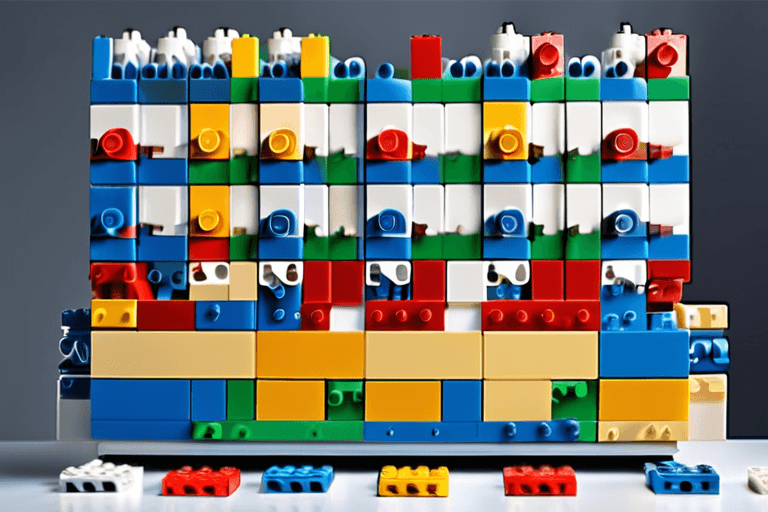
Lego unveiled its new "Smart Bricks" line, incorporating advanced technology into its classic building blocks, at the annual Toy Fair in Nuremberg, Germany, on Wednesday, but the announcement has been met with mixed reactions, particularly from child development experts. The new bricks feature embedded microchips, Bluetooth connectivity, and programmable sensors, allowing children to create interactive and responsive models.
The Smart Bricks system utilizes a simplified coding language, accessible through a dedicated app, enabling users to program their creations to perform various actions, such as moving, lighting up, or responding to environmental stimuli. According to Lego's product development team, the goal is to introduce children to basic coding and engineering principles in a playful and engaging manner. "We believe Smart Bricks will empower children to explore the world of STEM in a hands-on, creative way," said Astrid Petersen, Lego's Head of Innovation, in a press statement. "It's about building not just with bricks, but with code and imagination."
However, some child development experts expressed concerns about the potential impact of excessive screen time and the shift away from traditional, imaginative play. Dr. Emily Carter, a professor of child psychology at the University of Copenhagen, stated, "While the integration of technology can be beneficial, it's crucial to ensure that children are not losing out on the essential skills developed through unstructured, imaginative play. Over-reliance on technology could hinder creativity and problem-solving abilities."
The Smart Bricks system is designed to be compatible with existing Lego sets, allowing users to integrate the new technology into their current collections. The company plans to release several themed Smart Bricks kits, focusing on areas such as robotics, environmental science, and storytelling. The kits will range in price from $150 to $300, depending on the complexity and number of components.
Lego's move reflects a broader trend in the toy industry towards incorporating technology into traditional playthings. Competitors such as Mattel and Hasbro have also introduced tech-enhanced toys in recent years, aiming to appeal to a generation of digitally native children. The company anticipates that the Smart Bricks line will be available for purchase online and in stores starting in the fall of this year. Lego plans to closely monitor user feedback and conduct further research on the educational impact of the Smart Bricks system.














Discussion
Join the conversation
Be the first to comment