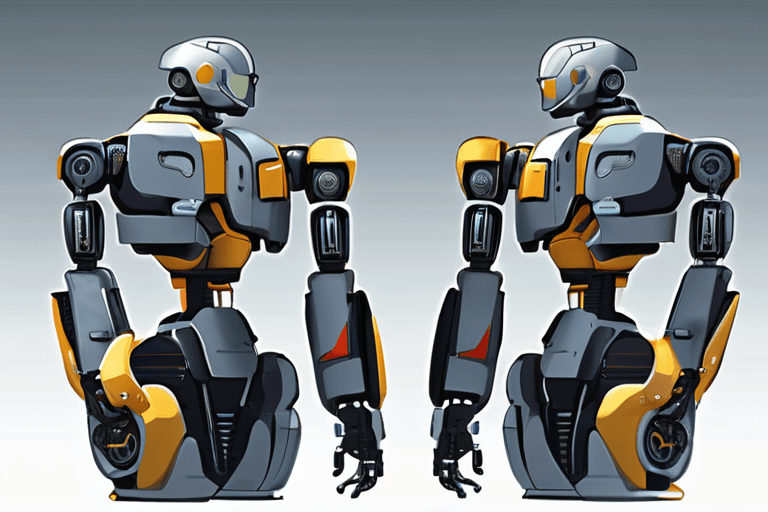
Hyundai Motor Group plans to roll out human-like robots in its factories starting in 2028, joining a growing list of major companies looking to integrate this cutting-edge technology into their operations. The South Korean firm showcased Atlas, a humanoid robot developed by Boston Dynamics, at the Consumer Electronics Show (CES) in Las Vegas on Monday, signaling its intent to revolutionize its manufacturing processes.
Hyundai stated it "plans to integrate Atlas across its global network," including its plant in Georgia, which previously faced scrutiny following a large-scale immigration raid in 2025. The move positions Hyundai alongside other industry giants like Amazon, Tesla, and Chinese car manufacturer BYD, all of whom have expressed interest in utilizing humanoid robots in their workflows.
The Atlas robots, designed for general industrial applications, are expected to gradually assume a wider range of responsibilities within Hyundai's factories. The company, which holds a majority stake in Boston Dynamics, the tech firm renowned for its Spot robot dog, envisions Atlas working collaboratively with human employees and autonomously managing machinery.
According to Hyundai, the introduction of these robots aims to alleviate the physical demands on human workers, handle potentially hazardous tasks, and pave the way for broader adoption of robotics in manufacturing. This initiative reflects a growing trend in the automotive industry, where automation and advanced technologies are being deployed to enhance efficiency, improve safety, and address labor shortages.
The integration of humanoid robots like Atlas raises questions about the future of work and the evolving relationship between humans and machines in the manufacturing sector. While Hyundai emphasizes the robots' role in easing physical strain and handling dangerous tasks, the long-term impact on employment and the skills required for future manufacturing jobs remains a subject of ongoing discussion. As Hyundai moves forward with its plans, the industry will be watching closely to see how these human-like robots transform the factory floor and reshape the landscape of automotive production.
















Discussion
Join the conversation
Be the first to comment