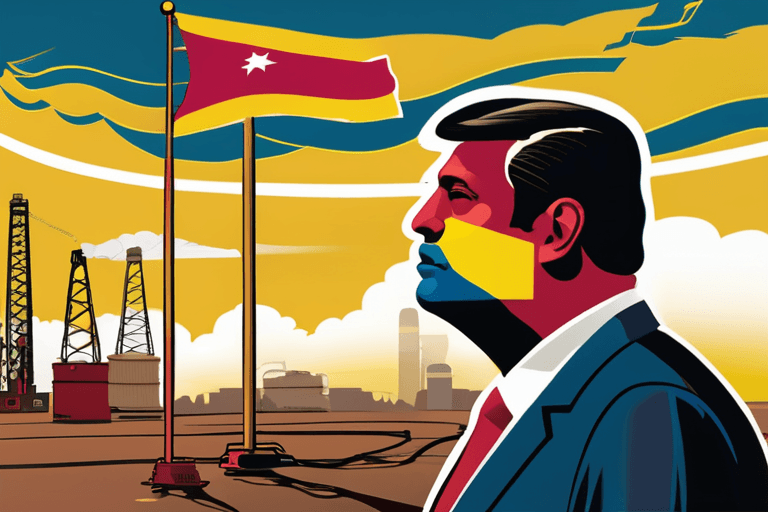
Following the capture of Nicolás Maduro by U.S. special forces in Venezuela and his subsequent indictment on drug, weapons, and narco-terrorism charges, former U.S. President Donald Trump asserted that Venezuela is poised for a significant oil boom driven by U.S. oil companies. Trump stated on Sunday that these companies, many of which have been absent from the country for decades, would invest billions to rebuild Venezuela's oil infrastructure and increase production.
Trump described Venezuela's nationalization of its oil industry as "the greatest theft in the history of the U.S.," claiming that U.S. companies would reclaim what was once theirs. However, energy experts remain skeptical about the feasibility and potential success of such a venture.
Historically, the removal of authoritarian regimes has not consistently led to increased oil production in countries like Venezuela, Libya, and Iraq. Data indicates that political instability, security concerns, and infrastructural damage often hinder oil production even after regime change.
The nationalization of Venezuela's oil industry began in the 1970s, culminating in the creation of Petróleos de Venezuela, S.A. (PDVSA). Under Maduro's leadership, PDVSA faced mismanagement, corruption, and declining production, leading to a severe economic crisis in Venezuela.
The potential for U.S. oil companies to revitalize Venezuela's oil sector hinges on several factors, including the establishment of a stable political environment, the restoration of damaged infrastructure, and the resolution of legal disputes over ownership and contracts. Experts also point to the need for significant investment and technological expertise to modernize Venezuela's aging oil facilities.
The involvement of AI in this process could be substantial. AI-driven predictive maintenance could optimize the performance and lifespan of oil infrastructure, while AI-powered geological surveys could identify new oil reserves. Furthermore, AI could enhance security measures to protect oil installations from sabotage and theft. However, the implementation of AI technologies also raises concerns about job displacement and the potential for algorithmic bias in decision-making processes.
The future of Venezuela's oil industry remains uncertain. While Trump's vision of a U.S.-led oil boom may appeal to some, the historical record suggests that a successful revitalization will require a multifaceted approach that addresses political, economic, and technological challenges. The coming months will be crucial in determining whether Venezuela can overcome these obstacles and unlock its vast oil reserves.
















Discussion
Join the conversation
Be the first to comment