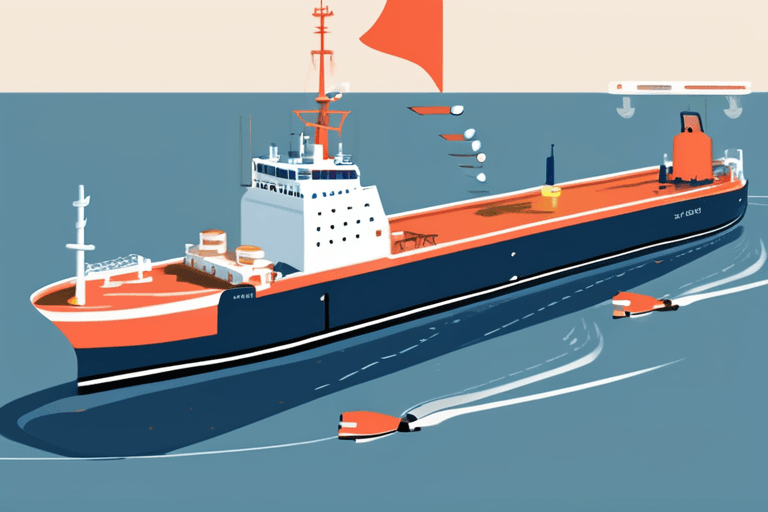
A video released by Russian state media purportedly shows a U.S. Coast Guard vessel shadowing a Russian-flagged oil tanker in the North Atlantic. U.S. authorities subsequently seized the tanker, alleging it was transporting oil from Iran and Venezuela in violation of U.S. sanctions, officials said Tuesday.
The video, the authenticity of which could not be independently verified, has sparked international debate regarding maritime law and the enforcement of economic sanctions. The U.S. Coast Guard has not yet released its own footage of the incident.
The seizure highlights the increasing role of artificial intelligence in maritime surveillance and enforcement. AI algorithms are now routinely used to analyze satellite imagery, track vessel movements, and predict potential sanctions violations. These systems can identify patterns and anomalies that human analysts might miss, leading to more effective enforcement of international regulations. "AI provides us with a significant advantage in monitoring illicit activities at sea," said a U.S. Treasury Department spokesperson, speaking on background. "It allows us to focus our resources on the most high-risk targets."
However, the use of AI in such operations also raises concerns about transparency and accountability. Critics argue that the reliance on algorithms can lead to biased or inaccurate assessments, particularly if the underlying data is flawed or incomplete. "We need to ensure that these AI systems are thoroughly tested and validated to prevent unintended consequences," said Dr. Anya Sharma, a professor of international law at the University of Oxford. "There must be human oversight to prevent errors and ensure fairness."
The incident also underscores the growing tensions between the U.S. and Russia over energy policy and international trade. The U.S. has imposed sanctions on Iran and Venezuela in an effort to curb their oil exports and pressure their governments. Russia has criticized these sanctions as illegal and has sought to expand its economic ties with both countries.
The seized tanker is currently being held in a U.S. port, and its cargo is being analyzed to determine its origin and destination. Legal proceedings are expected to follow, potentially involving international courts and arbitration. The outcome of these proceedings could have significant implications for the future of sanctions enforcement and the use of AI in maritime law. The U.S. government has stated it intends to fully prosecute any individuals or entities found to be involved in violating U.S. sanctions.
















Discussion
Join the conversation
Be the first to comment