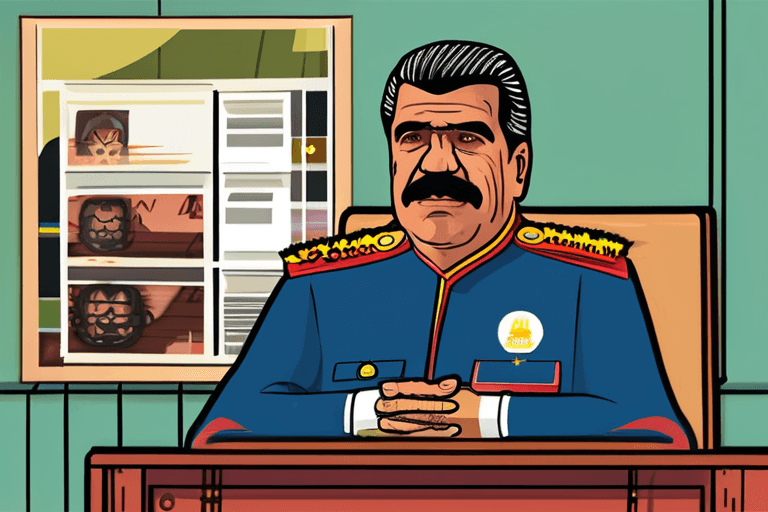
Venezuelan government officials led a large demonstration in Caracas on Tuesday to demand the release of ousted President Nicolás Maduro, while simultaneously cracking down on citizens suspected of celebrating his removal. Security forces have reportedly been conducting interrogations at checkpoints, boarding public transportation, and searching mobile phones for evidence of support for Maduro's ouster, according to reports from Venezuelans and human rights organizations.
These actions come four days after President Trump announced the United States would oversee Venezuela, with the interim leader being Delcy Rodríguez, Maduro's former vice president. At least 14 journalists and six citizens were detained in recent days, though most have since been released. The situation presents a complex dynamic, with the United States now backing a government that appears to be employing tactics similar to those used under Maduro's rule.
The political, security, and intelligence infrastructure that sustained Maduro's government remains largely intact. Critics argue that the current actions contradict the stated goals of promoting democracy and human rights in Venezuela. The U.S. government has yet to issue a formal statement addressing the reported increase in repressive measures. Day-to-day life for many Venezuelans has reportedly worsened since Maduro's removal.
The current political climate reflects a deep polarization within Venezuelan society. While some Venezuelans view Maduro's removal as a step towards restoring democracy, others remain loyal to the former president and view his ouster as an illegal intervention. The dueling demonstrations and reported crackdown highlight the challenges facing the interim government in establishing stability and legitimacy. The long-term implications of the U.S. intervention and its impact on Venezuelan society remain to be seen.
















Discussion
Join the conversation
Be the first to comment