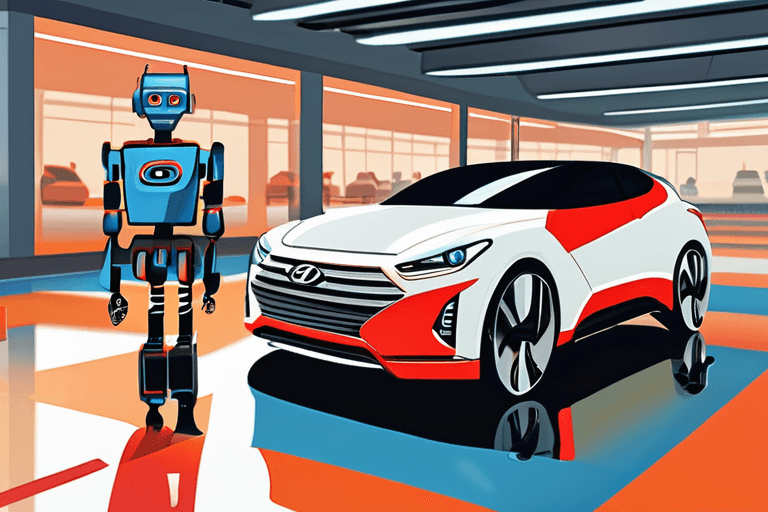
Hyundai stated that it "plans to integrate Atlas across its global network," including its plant in Georgia, which previously faced scrutiny following a large-scale immigration raid in 2025. The move positions Hyundai alongside other industry giants like Amazon, Tesla, and Chinese car maker BYD, all of whom have expressed interest in deploying humanoid robots within their facilities.
The Atlas robots are expected to gradually assume a wider range of responsibilities within the factories, according to Hyundai. The company, which holds a majority stake in Boston Dynamics, the firm renowned for its Spot robot dog, envisions Atlas working collaboratively with human employees and autonomously managing machinery.
Hyundai emphasized that the introduction of these robots aims to alleviate physical strain on human workers, handle potentially hazardous tasks, and ultimately pave the way for broader adoption of robotics in manufacturing. Atlas is specifically designed for general industrial use, with a focus on adaptability and seamless integration into existing workflows.
Osmond Chia, a business reporter covering the story, noted the potential impact of this technology on the automotive industry and beyond. "The integration of humanoid robots like Atlas could significantly reshape manufacturing processes, offering increased efficiency and improved worker safety," Chia commented. "However, it also raises questions about the future of human labor and the need for workforce retraining."
The deployment of Atlas represents a significant step forward in the evolution of robotics and their application in real-world industrial settings. As Hyundai moves forward with its plans, the industry will be closely watching to see how these human-like robots transform the factory floor and impact the future of work.


















Discussion
Join the conversation
Be the first to comment