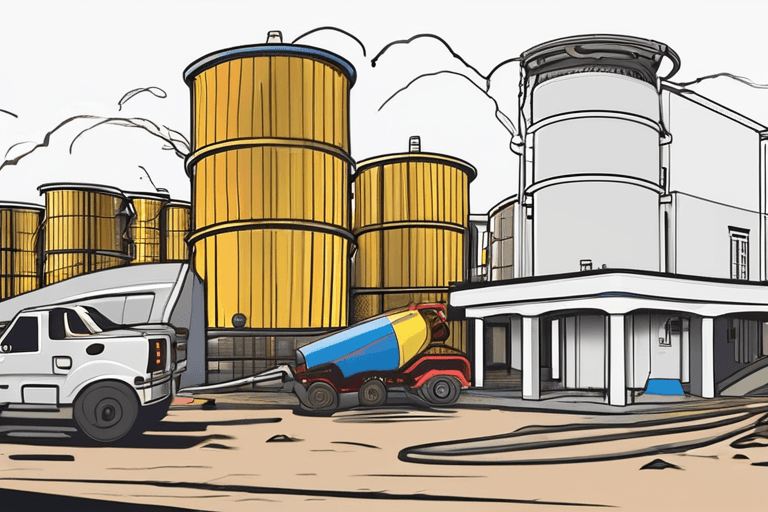
The United States will continue to control the sale of Venezuelan oil "indefinitely," according to a statement released by the White House on Wednesday. This decision follows the U.S. government's move to lay claim to approximately 50 million barrels of Venezuelan crude that had been blockaded, as well as the seizure of a Russian-flagged oil tanker allegedly linked to Venezuela.
The U.S. government plans to sell up to $3 billion worth of Venezuelan crude, currently stranded in tankers and storage facilities, into the global market. This action comes after what the White House described as the American military's "capture" of Nicolás Maduro, though further details on this were not immediately available. The move effectively allows the U.S. to remove certain sanctions to facilitate the continued sale of Venezuelan oil, albeit under U.S. control.
The decision to control Venezuelan oil sales introduces a new dynamic in the already complex global oil market. Venezuela, a founding member of OPEC, possesses some of the world's largest proven oil reserves. However, its oil production has plummeted in recent years due to a combination of economic mismanagement, corruption, and U.S. sanctions aimed at pressuring Maduro's government. These sanctions, initially imposed to promote democratic change, have significantly impacted Venezuela's economy and its ability to export oil.
The U.S. action raises questions about the long-term implications for Venezuela's sovereignty and its future economic recovery. Critics argue that the U.S. control over Venezuela's oil revenue could further destabilize the country and exacerbate its humanitarian crisis. Supporters, however, contend that it is a necessary step to prevent Maduro's government from using oil revenue to consolidate power and suppress dissent.
The international community has reacted with cautious concern. Some nations have expressed reservations about the legality of the U.S. seizing control of another country's natural resources. Others have acknowledged the need to address the ongoing political and economic crisis in Venezuela but emphasize the importance of respecting international law and the principle of national sovereignty.
The future of Venezuela's oil industry and its relationship with the U.S. remains uncertain. The U.S. government has not yet clarified how long it intends to maintain control over Venezuelan oil sales or what conditions would need to be met for it to relinquish control. The situation is likely to continue to evolve, with potential implications for global oil prices, geopolitical stability in the region, and the future of Venezuela itself.


















Discussion
Join the conversation
Be the first to comment