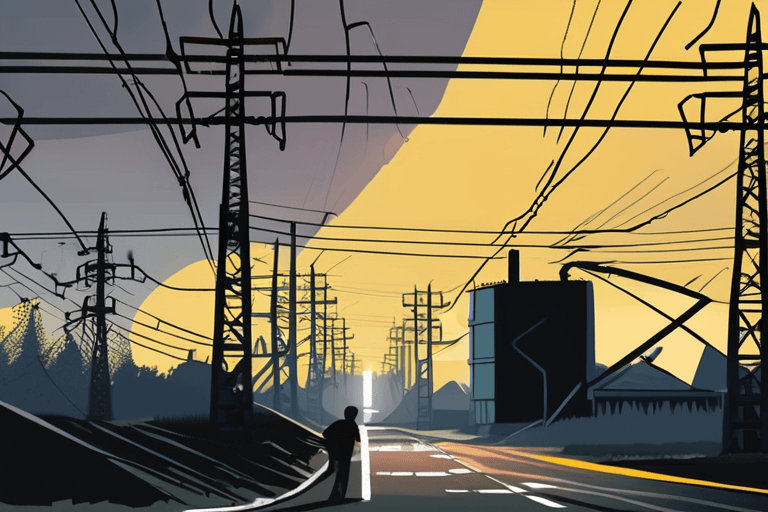
Russian attacks left the Dnipropetrovsk and Zaporizhzhia regions of southeastern Ukraine almost entirely without power Wednesday night, according to the country's energy ministry. Critical infrastructure was operating on reserve power, the ministry stated on Telegram, adding that water supplies and internet access were also disrupted.
The intensified Russian attacks on Ukraine's energy infrastructure are aimed at crippling power supplies during the winter months. Ukraine's Prime Minister Yulia Svyrydenko wrote on Telegram that the "energy system is under enemy attacks every day, and energy workers are operating in extremely difficult conditions to provide people with light and heat." She added that "deteriorating weather conditions put additional strain on critical infrastructure."
These disruptions to power and heating occurred as temperatures plunged. State energy company Ukrenergo said on Telegram that "emergency restoration work in the regions affected by the attack will begin immediately as soon as the security situation allows."
The ongoing conflict highlights the vulnerability of critical infrastructure to both physical and cyber attacks. The reliance on centralized power grids makes them susceptible to large-scale disruptions, impacting essential services and the daily lives of citizens. The use of AI in grid management and security is being explored to enhance resilience. AI algorithms can analyze vast amounts of data to predict potential failures, optimize energy distribution, and detect anomalies indicative of cyber intrusions. However, the integration of AI also introduces new challenges, such as the need for robust cybersecurity measures to protect AI systems from manipulation and the ethical considerations surrounding algorithmic bias in resource allocation during emergencies.
The situation underscores the importance of distributed energy resources, such as solar and wind power, coupled with energy storage systems. These decentralized solutions can provide backup power during grid outages and enhance the overall resilience of the energy system. Furthermore, advancements in smart grid technologies, including AI-powered microgrids, are enabling more localized and autonomous energy management, reducing dependence on centralized infrastructure.
The attacks on Ukraine's energy infrastructure also raise concerns about the potential for similar attacks on critical infrastructure in other countries. As nations become increasingly reliant on interconnected digital systems, the risk of cascading failures due to cyber or physical attacks grows. This necessitates a proactive approach to cybersecurity, including the development of AI-driven threat detection and response systems, as well as international cooperation to share information and best practices.
Ukrenergo is currently assessing the damage and coordinating restoration efforts. The timeline for full restoration of power and other essential services remains uncertain, depending on the extent of the damage and the security situation. International aid organizations are providing assistance to affected communities, focusing on providing emergency shelter, food, and medical care.



















Discussion
Join the conversation
Be the first to comment