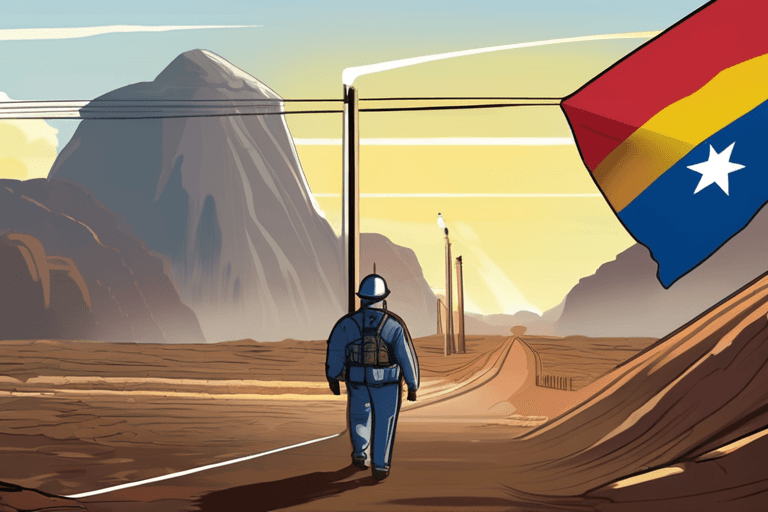
The United States' recent actions against Venezuela mark a potential turning point in the struggle for control over South America's extensive mineral resources, with implications for both the global energy transition and the balance of power between the U.S. and China. The intervention, while ostensibly targeting a specific regime, has broader ramifications for the region's future.
Venezuela's oil reserves are a key factor, but the nation also possesses significant deposits of rare earth minerals and other resources crucial for renewable energy technologies. The outcome of this conflict will likely determine whether these resources are used to fuel a shift towards sustainable energy or to reinforce established fossil fuel interests and U.S. military dominance.
The situation highlights the growing competition between the U.S. and China for access to vital resources around the world. South America, with its vast mineral wealth, has become a key battleground in this rivalry. The U.S. has historically exerted considerable influence in the region, but China's economic and political presence has been steadily increasing in recent years.
Analysts suggest that the U.S. intervention in Venezuela is driven by a desire to counter China's growing influence and secure access to the country's resources. However, critics argue that the intervention is a violation of international law and will further destabilize the region.
The Venezuelan oil industry, already struggling due to years of mismanagement and corruption, faces further challenges. Experts estimate that repairing the country's oil infrastructure would require tens of billions of dollars and take many years.
The international community remains divided on the issue. Some countries have expressed support for the U.S. intervention, while others have condemned it as an act of aggression. The United Nations has called for a peaceful resolution to the crisis.
The future of Venezuela and South America's mineral wealth remains uncertain. The outcome of the current conflict will have far-reaching consequences for the region and the world.


















Discussion
Join the conversation
Be the first to comment