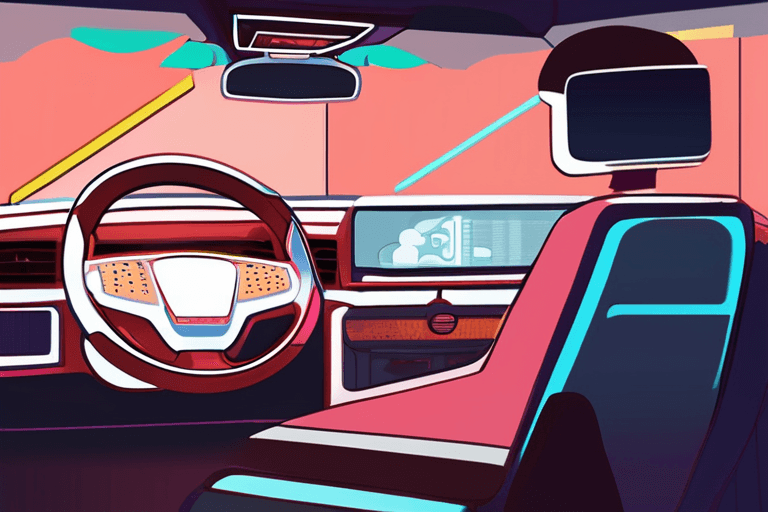
Ford is planning to integrate artificial intelligence assistants into its vehicles, with a target launch date of 2026. The announcement was made at the annual Consumer Electronics Show in Las Vegas, where automakers increasingly unveil their technological advancements. According to Ford, the goal is to personalize the in-car experience using AI, moving beyond generic intelligence to create a system that understands the driver's context and vehicle capabilities.
Doug Field, Ford's chief EV, design, and digital officer, outlined the company's vision in a blog post. "Our vision for the customer is simple, but not elementary: a seamless layer of intelligence that travels with you between your phone and your vehicle," Field stated. He emphasized the need for AI that comprehends the driver's location, activities, and the vehicle's potential to simplify decision-making.
The integration of AI into vehicles represents a significant shift in the automotive industry. AI assistants can potentially manage various tasks, from navigation and entertainment to vehicle maintenance and safety features. This move aligns with broader trends in the tech industry, where AI is being implemented across various sectors to enhance user experiences and automate processes.
The concept of personalized AI in vehicles raises questions about data privacy and security. Automakers will need to address concerns about how user data is collected, stored, and used to ensure transparency and build trust with consumers. The ethical implications of AI decision-making in safety-critical systems, such as autonomous driving features, also require careful consideration.
Ford's announcement comes amid rapid advancements in AI technology, particularly in areas like natural language processing and machine learning. These advancements are enabling more sophisticated and intuitive AI assistants that can understand and respond to human commands with greater accuracy. The automotive industry is actively exploring partnerships with tech companies and investing in AI research to accelerate the development of these technologies.
The next steps for Ford involve further development and testing of its AI assistant technology. The company will likely focus on refining the user interface, expanding the range of features, and ensuring seamless integration with existing vehicle systems. The success of this initiative will depend on Ford's ability to deliver a truly personalized and valuable experience for its customers while addressing the ethical and practical challenges associated with AI in vehicles.

















Discussion
Join the conversation
Be the first to comment