Nvidia announced it will begin shipping its new artificial intelligence chip, the Vera Rubin, later this year, alongside the integration of its self-driving technology into Mercedes-Benz vehicles. The Vera Rubin chip, unveiled by CEO Jensen Huang at CES in Las Vegas, is designed to perform more computing tasks while consuming less power compared to previous generations, aiming to accelerate and reduce the cost of AI processing.
The chip, which has been in development for three years, is already being manufactured and is slated to be delivered to major clients like Microsoft and Amazon in the latter half of the year, fulfilling a commitment Huang initially made at Nvidia's annual conference in San Jose, California, last March. According to Nvidia, the Vera Rubin chip will enable companies to train and deploy AI models more efficiently, potentially leading to advancements in various fields, including natural language processing, computer vision, and robotics.
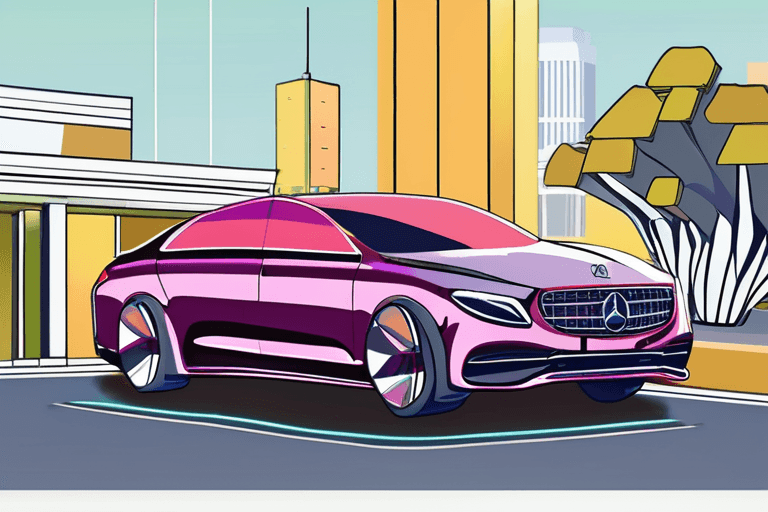
In addition to the new AI chip, Huang detailed Nvidia's progress in the autonomous vehicle sector. Mercedes-Benz will begin incorporating Nvidia's self-driving technology into its vehicles this year, offering a system comparable to Tesla's Autopilot. This collaboration marks a significant step for Nvidia in the automotive industry, as it seeks to establish itself as a key player in the development of autonomous driving solutions.
The advancements in AI chips and autonomous driving technology have broad implications for society. More powerful and efficient AI chips could accelerate the development and deployment of AI-powered applications across various sectors, potentially leading to increased automation, improved efficiency, and new innovations. However, these advancements also raise ethical considerations, such as the potential displacement of human workers and the need for responsible AI development and deployment.
Nvidia's efforts to enhance autonomous driving technology could transform transportation, making it safer, more efficient, and more accessible. However, the widespread adoption of autonomous vehicles also raises concerns about safety, security, and the potential impact on employment in the transportation industry.
The Vera Rubin chip represents Nvidia's latest effort to maintain its leadership in the AI hardware market. The company faces increasing competition from other chipmakers, as well as from cloud providers that are developing their own custom AI chips. The success of the Vera Rubin chip will depend on its ability to deliver on its promises of increased performance and efficiency, and on its adoption by a wide range of customers.
The integration of Nvidia's self-driving technology into Mercedes-Benz vehicles is a significant milestone for the company, but it also represents just one step in the long and complex journey toward fully autonomous driving. Further development and testing are needed to ensure the safety and reliability of autonomous vehicles, and regulatory frameworks must be established to govern their operation.
















Discussion
Join the conversation
Be the first to comment