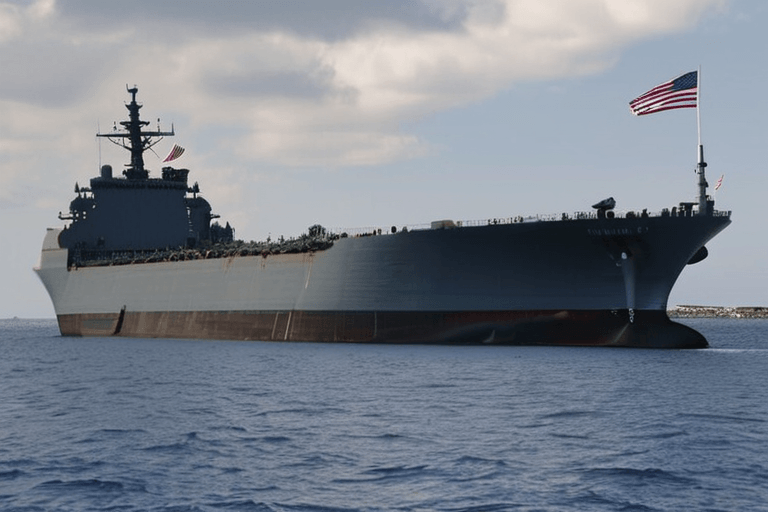
U.S. forces seized two tankers allegedly linked to Venezuelan oil exports in separate operations conducted in the North Atlantic and the Caribbean, according to U.S. officials. The first seizure involved the Russian-flagged Marinera, which was boarded after a nearly two-week pursuit in the waters between Iceland and Scotland. The U.K. Royal Navy provided logistical support during the operation. The second tanker, MT Sophia, was boarded in the Caribbean and accused by the U.S. of engaging in "illicit activities."
The seizures are part of a broader U.S. effort to curtail Venezuelan crude oil exports. The timing of the operations followed closely after U.S. special forces reportedly seized Venezuelan President Nicolás Maduro in a raid on his residence in Caracas.
Defense Secretary Pete Hegseth stated on X, formerly Twitter, that "The blockade of sanctioned and illicit Venezuelan oil remains in FULL EFFECT - anywhere in the world."
Moscow condemned the seizure of the Marinera, demanding that the U.S. ensure proper treatment of the Russian crew members and facilitate their swift return to Russia.
The U.S. has been employing increasingly sophisticated methods to track and intercept vessels involved in sanctioned oil trade, often referred to as a "shadow fleet" or "ghost fleet." These methods leverage AI-powered maritime surveillance technologies that analyze vessel movements, ownership data, and financial transactions to identify potential sanctions violations. AI algorithms can detect patterns indicative of illicit activities, such as ship-to-ship transfers at sea, altered vessel identification, and complex ownership structures designed to obscure the origin of the oil.
The use of AI in enforcing sanctions raises questions about transparency and accountability. While AI can enhance the efficiency of identifying and intercepting illicit shipments, it also introduces the potential for algorithmic bias and errors. The reliance on AI-driven assessments could lead to the misidentification of legitimate trade or disproportionately affect certain regions or actors.
The U.S. Treasury Department and other agencies have been investing in AI-driven tools to strengthen sanctions enforcement. These tools are designed to analyze vast datasets and identify networks involved in sanctions evasion, money laundering, and other illicit activities. The development and deployment of these technologies are ongoing, with a focus on improving accuracy and minimizing unintended consequences.
The current status of the seized tankers and their cargo remains unclear. The U.S. government is expected to conduct further investigations to determine the full extent of the alleged sanctions violations and pursue appropriate legal action. The incident is likely to further escalate tensions between the U.S., Venezuela, and Russia.

















Discussion
Join the conversation
Be the first to comment