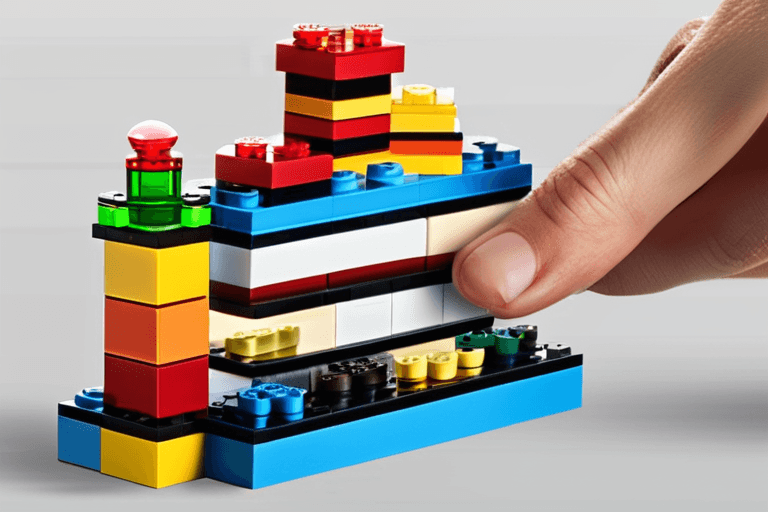
Lego unveiled its new line of "Smart Bricks" at the annual Toy Fair in Nuremberg, Germany, on Wednesday, integrating advanced technology directly into the company's iconic building blocks. The Smart Bricks, developed over the past three years at Lego's innovation lab in Billund, Denmark, incorporate miniature sensors, microprocessors, and Bluetooth connectivity, allowing them to interact with each other and with external devices like smartphones and tablets.
The company demonstrated several applications of the new technology, including programmable robots, interactive building sets that respond to touch and sound, and educational tools designed to teach children basic coding and engineering principles. "We believe Smart Bricks represent the future of play," said Hans Peter Müller, Lego's Chief Technology Officer, during the product launch. "By combining the tactile experience of building with the power of digital technology, we can unlock entirely new levels of creativity and learning."
However, the announcement has been met with some unease from child development experts, who expressed concerns about the potential for over-stimulation and the displacement of traditional, imaginative play. Dr. Emily Carter, a professor of child psychology at the University of Oxford, stated, "While the technological advancements are impressive, we need to carefully consider the impact on children's cognitive development. Unstructured play is crucial for developing creativity, problem-solving skills, and social-emotional intelligence. We risk undermining these benefits if we overly rely on technology-driven toys."
The Smart Bricks utilize a proprietary communication protocol that allows them to communicate with each other within a range of approximately 10 meters. Each brick contains a small, rechargeable battery, providing several hours of playtime on a single charge. The bricks are also compatible with existing Lego sets, allowing users to integrate them into their current collections.
Lego emphasized the educational potential of the Smart Bricks, highlighting their ability to teach children fundamental STEM concepts in a fun and engaging way. The company plans to release a series of educational kits designed for different age groups, with accompanying software and lesson plans for teachers.
The initial line of Smart Bricks is scheduled to be available for purchase in the fall of this year, with prices ranging from $50 for a basic starter kit to $300 for more advanced sets. Lego plans to continue developing new applications and functionalities for the Smart Bricks in the coming years, with a focus on expanding their educational offerings and integrating them with other digital platforms. The company acknowledged the concerns raised by experts and stated its commitment to conducting further research on the impact of Smart Bricks on children's development.

















Discussion
Join the conversation
Be the first to comment