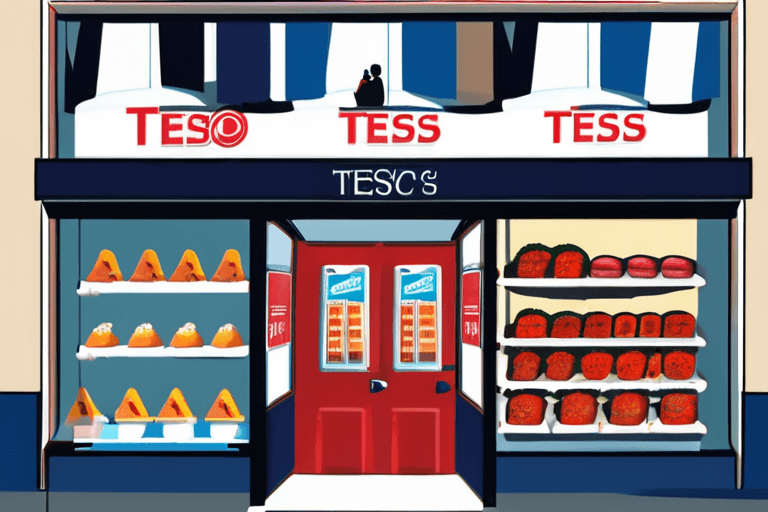
Tesco and Marks & Spencer both reported robust food sales during the crucial Christmas trading period, defying a challenging economic environment.
Tesco's UK sales increased by 3.2% compared to the previous year, resulting in the company achieving its highest market share in over a decade. Marks & Spencer (M&S) reported a 5.5% increase in food sales, attributing the success to its "Christmas hero lines," Italian ready meals, in-store bakery, and deli offerings. M&S Chief Executive Stuart Machin highlighted the company's outperformance in the food sector, noting that it had reached a new market share milestone.
While M&S experienced strong growth in food, its clothing, home, and beauty business faced a 2.9% sales decline. The company cited lower High Street footfall and ongoing repercussions from the previous year's cyber-attack, which led to stock and inventory challenges, as contributing factors to the decline.
The performance of these two retail giants provides insight into consumer spending habits during the holiday season. The strong food sales suggest that consumers prioritized festive meals and at-home celebrations, even amidst economic uncertainty. However, the decline in M&S's non-food sales indicates a potential shift in consumer spending, with shoppers potentially cutting back on discretionary purchases like clothing and home goods.
Tesco's ability to increase its market share underscores its competitive position in the grocery sector. M&S's focus on "hero lines" and specific food categories demonstrates a strategy to differentiate itself and cater to evolving consumer preferences.
Looking ahead, both companies will need to navigate the ongoing economic challenges and adapt to changing consumer behavior. Tesco will aim to maintain its market share gains, while M&S will focus on revitalizing its clothing, home, and beauty business while sustaining its momentum in the food sector.

















Discussion
Join the conversation
Be the first to comment