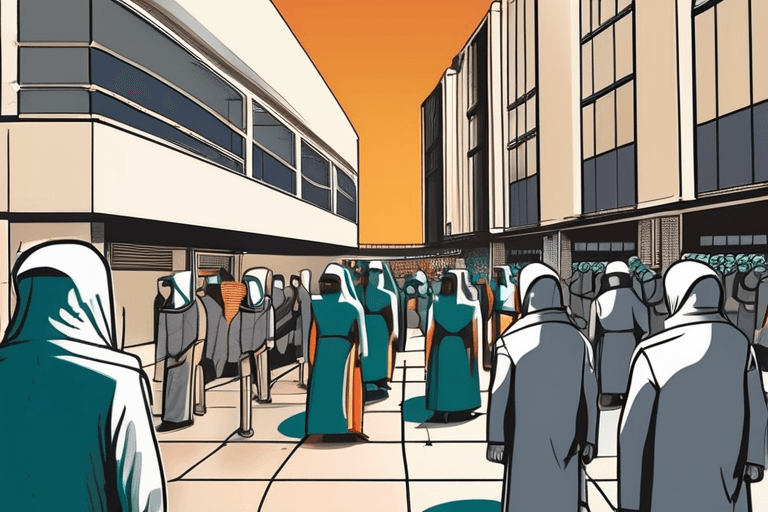
Shops closed during protests in Tehran's centuries-old Grand Bazaar on a cold December day, sparking demonstrations that spread across Iran, fueled by economic pressures and soaring consumer prices. The protests, which began after merchants along Jomhouri Republic Avenue closed their shops, were initially triggered by the plummeting value of the Iranian rial, which had lost nearly half its value in the past year, according to the Associated Press.
The commercial hubs, traditionally seen as indicators of public sentiment, became focal points for widespread discontent over persistent high inflation, stagnant wages, and the increasing cost of living. As the rial's value continued to decline, merchants faced mounting financial losses, exacerbating their frustration.
The demonstrations quickly expanded beyond Tehran, reaching cities in western Iran, including Azna, Malekshahi, and Kermanshah. Protests also erupted in Marvdasht in southern Iran and Fouladshahr in the center of the country, among other locations. The widespread nature of the protests underscored the depth of economic hardship felt by Iranians across different regions.
Tohid Asadi, reporting from Tehran for the Associated Press on January 8, 2026, noted that the protests were predominantly driven by economic grievances. The rising cost of essential goods and services placed immense strain on households, leading to increased public anger and a willingness to participate in demonstrations.
The Iranian economy has faced numerous challenges in recent years, including international sanctions, mismanagement, and fluctuations in global oil prices. These factors have contributed to high inflation rates and a decline in the purchasing power of ordinary citizens. The government has implemented various measures to address the economic crisis, but these efforts have so far failed to alleviate the widespread economic hardship.
The protests reflect a growing sense of desperation among Iranians who feel that their economic concerns are not being adequately addressed. The closure of shops in Tehran's Grand Bazaar, a historic symbol of Iranian commerce, highlights the severity of the economic situation and the willingness of merchants to take collective action. The situation remains fluid, with the potential for further protests and unrest if economic conditions do not improve.

















Discussion
Join the conversation
Be the first to comment