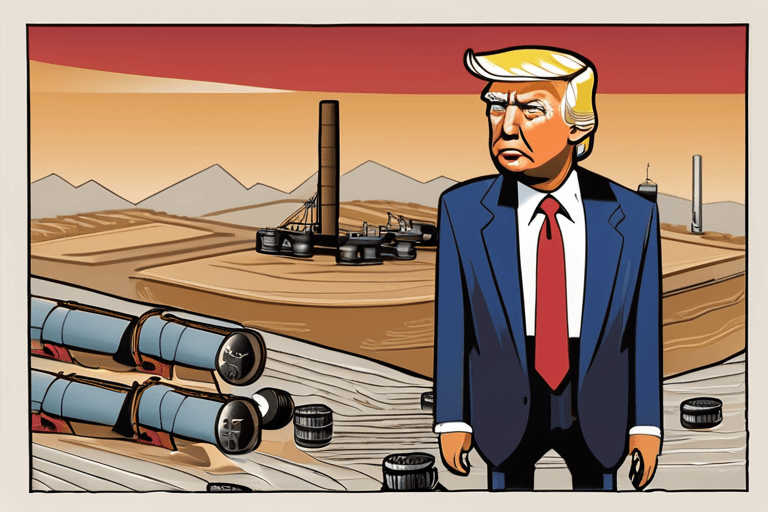
President Trump's vision for U.S. involvement in Venezuela's oil industry faces significant challenges, potentially creating a complex scenario for both American energy producers and consumers. The administration's plan to leverage Venezuelan petroleum reserves to lower oil prices to around $50 a barrel presents a dilemma, as it could simultaneously benefit consumers through lower costs and threaten the profitability of domestic shale producers, who require higher prices to operate viably.
The proposal to allow U.S. drillers access to Venezuela's vast oil reserves could lead to a surge in global oil supply, potentially driving down prices. However, this influx could negatively impact the American shale industry, which has become a significant player in the global energy market. Shale producers often face higher production costs compared to traditional oil extraction methods, making them vulnerable to price fluctuations.
Furthermore, the administration might need to offer federal subsidies or revenue guarantees to incentivize U.S. companies to rebuild Venezuela's deteriorated oil infrastructure. This potential financial burden on American taxpayers raises questions about the overall economic feasibility and potential consequences of the plan. The situation could result in Washington effectively devaluing oil, harming its domestic industry while simultaneously funding increased production abroad.
The long-term implications of this strategy are uncertain. Some analysts suggest that a stable and revitalized Venezuelan oil industry could contribute to global energy security and reduce reliance on other oil-producing nations. However, others caution that the plan could create market distortions and undermine the competitiveness of the U.S. energy sector. The potential for political instability in Venezuela also adds a layer of risk to the equation.
The administration's approach to Venezuela's oil reserves is still evolving, and the specific details of any potential agreements or policies remain unclear. The coming months will likely see further discussions and negotiations as the U.S. government seeks to navigate the complexities of this situation.

















Discussion
Join the conversation
Be the first to comment