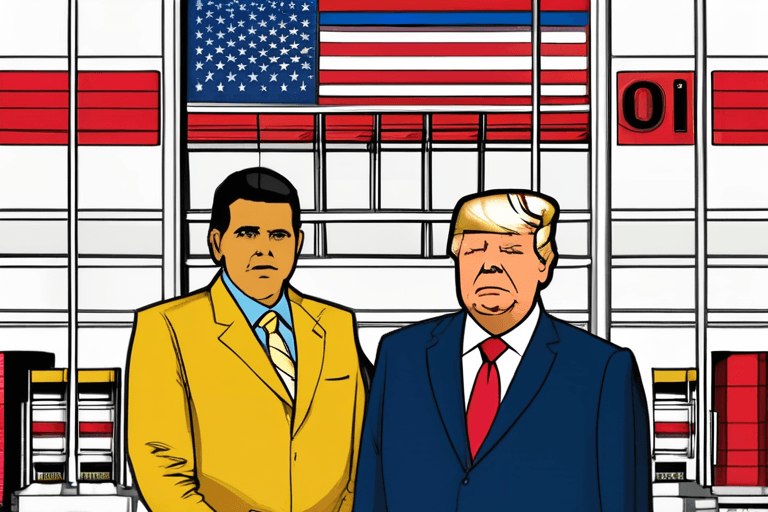
The United States' control over Venezuelan oil sales could continue "indefinitely," according to the White House, a move designed to exert leverage over the interim government in Caracas. This development follows President Trump's statement to the New York Times that US involvement in Venezuela could last for years, raising concerns about the long-term economic implications for the oil-rich nation.
The US Energy Secretary, Chris Wright, argued that maintaining control over Venezuela's oil revenue was crucial for influencing the interim government. While specific figures on projected oil revenue under US control were not disclosed, Venezuela's oil sector has historically been a significant contributor to its GDP, accounting for a substantial portion of its export earnings. Sanctions imposed by the US have already significantly impacted Venezuela's oil production, leading to a sharp decline in output and revenue in recent years.
The extended US involvement and control over oil sales could further destabilize Venezuela's economy, potentially disrupting global oil markets. The uncertainty surrounding the future of Venezuela's oil industry could lead to price volatility and impact the supply chains of companies that rely on Venezuelan crude. Companies with existing investments in Venezuela's oil sector face increased risks and potential losses due to the ongoing political and economic instability.
Venezuela's oil industry has been plagued by mismanagement, corruption, and underinvestment for years. The country holds some of the world's largest proven oil reserves, but its production has plummeted due to a combination of factors, including sanctions, lack of maintenance, and a shortage of skilled workers. The US intervention adds another layer of complexity to the already challenging situation, raising questions about the long-term viability of Venezuela's oil industry.
The future outlook for Venezuela's economy remains uncertain. While opposition leader María Corina Machado expressed optimism that the ouster of Maduro would lead to a "free" Venezuela, the path forward is fraught with challenges. The duration and extent of US involvement, the policies of the interim government, and the ability to attract foreign investment will all play a crucial role in shaping Venezuela's economic future. The indefinite control over oil sales by the US suggests a prolonged period of economic and political uncertainty, with significant implications for businesses operating in the region.

















Discussion
Join the conversation
Be the first to comment