The government is facing accusations of delaying the implementation of legislation designed to combat deepfakes, particularly in light of the emergence of Grok AI and its potential for misuse. Critics argue that the slow pace of regulatory action is leaving society vulnerable to the malicious applications of increasingly sophisticated artificial intelligence technologies.
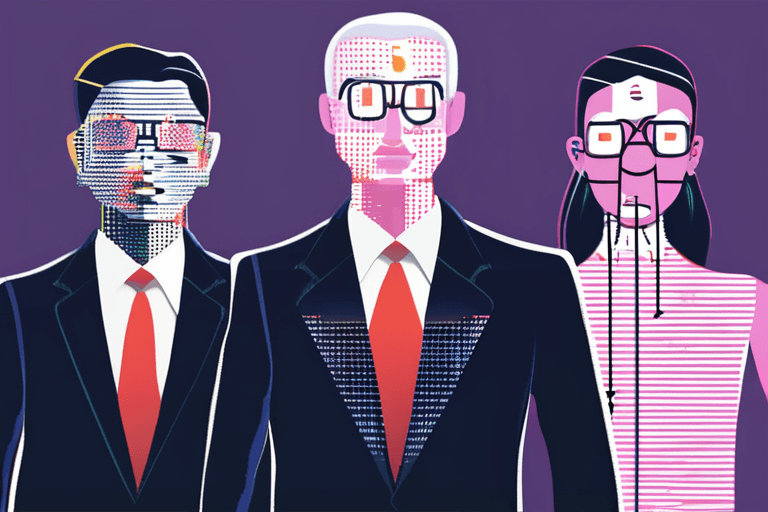
The concerns center on the ability of AI models like Grok, developed by xAI, to generate highly realistic and deceptive audio and video content. Deepfakes, created using techniques such as generative adversarial networks (GANs) and diffusion models, can convincingly mimic real individuals, making it difficult to distinguish between authentic and fabricated material. This capability raises significant risks for political manipulation, fraud, and reputational damage.
"The technology is evolving at an exponential rate, but our legal frameworks are lagging far behind," said Dr. Anya Sharma, a professor of AI ethics at the University of California, Berkeley. "We need proactive legislation that addresses the specific challenges posed by deepfakes, including clear guidelines on liability, content labeling, and user education."
Generative adversarial networks, or GANs, involve two neural networks: a generator that creates synthetic data and a discriminator that attempts to distinguish between real and fake data. Through this adversarial process, the generator learns to produce increasingly realistic outputs. Diffusion models, another technique used in deepfake creation, work by gradually adding noise to an image or video and then learning to reverse the process, generating new content from the noise.
The delay in legislation is attributed to several factors, including the complexity of the technology, the need for international cooperation, and concerns about infringing on free speech. Some policymakers argue that overly broad regulations could stifle innovation and hinder the beneficial applications of AI.
"We are carefully considering the implications of deepfake technology and working to develop a balanced regulatory approach," stated a spokesperson for the Department of Justice. "Our goal is to protect the public from harm while fostering responsible innovation in the AI sector."
However, advocacy groups argue that the current lack of legal clarity is already having a chilling effect on public discourse. The fear of being targeted by deepfake attacks can discourage individuals from expressing their opinions online, particularly on sensitive topics.
Several countries have already implemented or are considering legislation to address deepfakes. The European Union's Digital Services Act includes provisions for identifying and removing illegal content, including deepfakes. In the United States, some states have passed laws specifically targeting the creation and distribution of malicious deepfakes.
The debate over deepfake regulation highlights the broader challenge of governing rapidly evolving AI technologies. Experts emphasize the need for a multi-faceted approach that includes technical solutions, such as watermarking and content authentication, as well as legal and ethical frameworks.
The government has announced that it is conducting a series of public consultations on deepfake regulation and plans to introduce draft legislation in the coming months. The effectiveness of these measures will depend on their ability to strike a balance between protecting society from harm and promoting innovation in the field of artificial intelligence. The development and deployment of models like Grok AI have only intensified the urgency of this task.















Discussion
Join the conversation
Be the first to comment