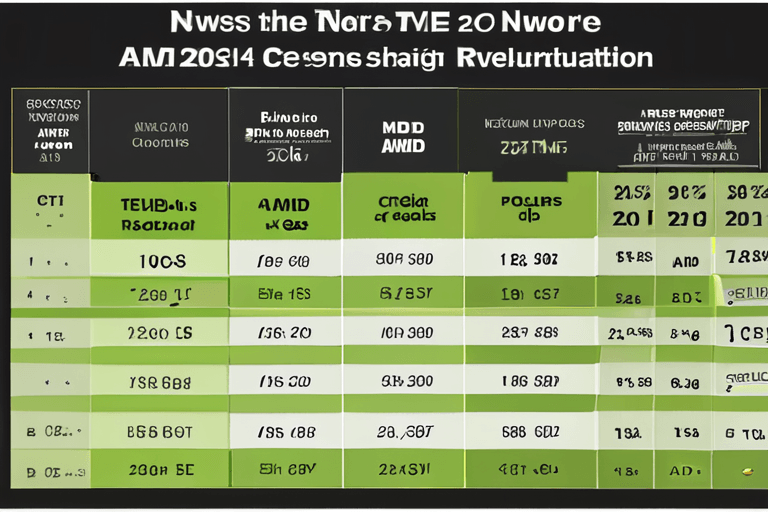
CES 2026 in Las Vegas showcased a strong emphasis on artificial intelligence, with Nvidia and AMD unveiling new technologies alongside other hardware innovations. Nvidia CEO Jensen Huang presented the Rubin computing architecture, designed to address the growing computational needs of AI, and is slated to succeed the Blackwell architecture starting in 2026.
Huang's presentation highlighted Nvidia's achievements in AI and outlined the company's vision for the future, including advancements in autonomous vehicles. The company introduced a new AI model specifically for autonomous driving, aiming to improve the safety and efficiency of self-driving systems. According to Nvidia, the Rubin architecture will provide a significant performance boost for AI applications, enabling faster training and deployment of complex models.
AMD also made significant announcements, introducing new chips designed for AI and high-performance computing. These chips are engineered to compete with Nvidia's offerings, providing alternative solutions for AI developers and researchers. AMD's advancements reflect the increasing demand for specialized hardware to support AI workloads, driving competition and innovation in the semiconductor industry.
Beyond the major players, AI permeated numerous exhibits, with companies demonstrating AI-powered applications in various sectors, from healthcare to entertainment. Razer, known for its gaming peripherals, presented AI-driven concepts that explored novel user experiences. While some of these applications are still in early stages, they illustrate the broad potential of AI to transform different aspects of daily life.
The focus on AI at CES 2026 underscores the technology's growing importance across industries. As AI models become more sophisticated, the need for powerful and efficient hardware will continue to drive innovation. The announcements from Nvidia and AMD signal a new era of AI-centric computing, with implications for society and the economy. The event continues this week, with further announcements expected from other tech companies.














Discussion
Join the conversation
Be the first to comment