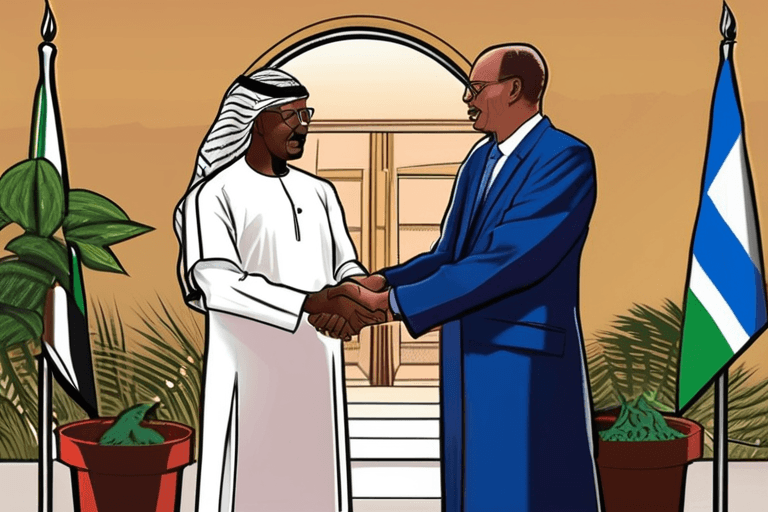
Israeli Foreign Minister Gideon Saar visited Somaliland on Tuesday, marking the first official visit by an Israeli representative since the establishment of full diplomatic relations between the two entities in late December. The visit follows Israeli Prime Minister Benjamin Netanyahu's announcement on December 26 that Israel would recognize Somaliland, a breakaway region of Somalia, as an independent state.
Netanyahu stated that the recognition aligned with the principles of the Abraham Accords, a U.S.-led initiative that encouraged several Arab nations to normalize relations with Israel in exchange for diplomatic and financial incentives from the United States. The move has significant implications for the geopolitical landscape of the Horn of Africa.
Somaliland, a former British protectorate, declared its independence from Somalia in 1991 following the collapse of the Somali central government. Despite lacking widespread international recognition, Somaliland has maintained a functioning government, its own currency, and a relatively stable political environment compared to Somalia, which has been plagued by conflict and instability for decades.
The establishment of diplomatic ties between Israel and Somaliland is viewed by some analysts as a strategic move by Israel to gain a foothold in the Horn of Africa, a region of increasing strategic importance due to its proximity to vital shipping lanes and its role in regional security dynamics. Somaliland, in turn, may be seeking international legitimacy and economic benefits through its relationship with Israel.
The visit and recognition have drawn condemnation from Somalia's government, which views Somaliland as an integral part of its territory. The Somali government has denounced Israel's actions as a violation of its sovereignty and has called on the international community to reject the recognition. The African Union has yet to issue a formal statement on the matter.
The development has sparked mixed reactions across the Arab world, with some countries quietly supporting the move as a potential counterweight to Iranian influence in the region, while others remain critical due to the ongoing Israeli-Palestinian conflict. The United States has not yet commented on Israel's recognition of Somaliland.
The long-term implications of this diplomatic development remain to be seen, but it is likely to further complicate the already complex political dynamics in the Horn of Africa and could potentially lead to increased tensions between Somalia and Somaliland. The international community is closely watching how this situation unfolds and its potential impact on regional stability.


















Discussion
Join the conversation
Be the first to comment