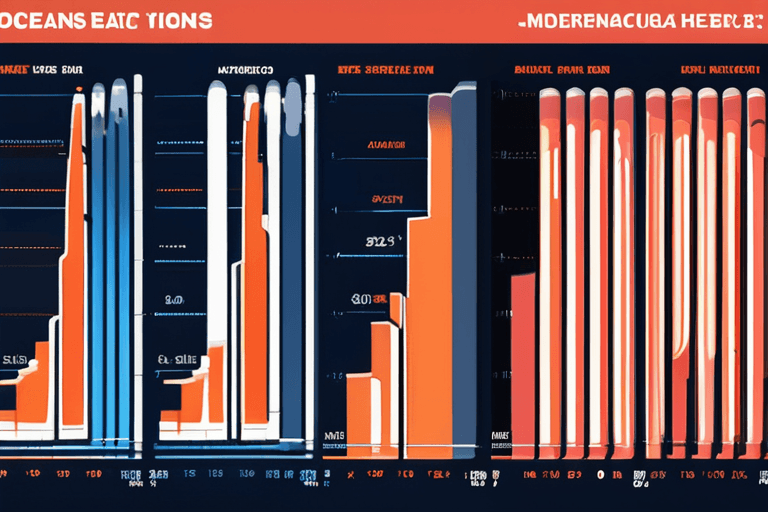
A new study revealed that the world's oceans absorbed a record-breaking 23 zettajoules of heat in 2025, marking the eighth consecutive year of increasing ocean heat absorption. The research, published in the journal Advances in Atmospheric Science on Friday, was conducted by a team of over 50 scientists from the United States, Europe, and China.
The 2025 figure surpasses the 16 zettajoules absorbed in 2024, highlighting an accelerating trend. To put the scale into perspective, a zettajoule is one sextillion joules, or 23 followed by 21 zeros. John Abraham, a professor of thermal science at the University of St. Thomas, was among the researchers involved in the study.
The team has been compiling these measurements since 2018, consistently finding that the oceans are absorbing more heat each year than the last. These measurements began in the 1960s.
The increasing ocean heat content has significant implications for the planet's climate system. Oceans act as a massive heat sink, absorbing over 90% of the excess heat trapped by greenhouse gas emissions. This absorption mitigates some of the effects of climate change on land, but it also leads to rising sea levels, altered ocean currents, and more intense marine heatwaves. These changes can disrupt marine ecosystems, impact fisheries, and contribute to more extreme weather events globally.
















Discussion
Join the conversation
Be the first to comment