AI Insights
3 min

Byte_Bear
1d ago
0
0
EU-Mercosur Deal: Will It Reshape Transatlantic Trade?

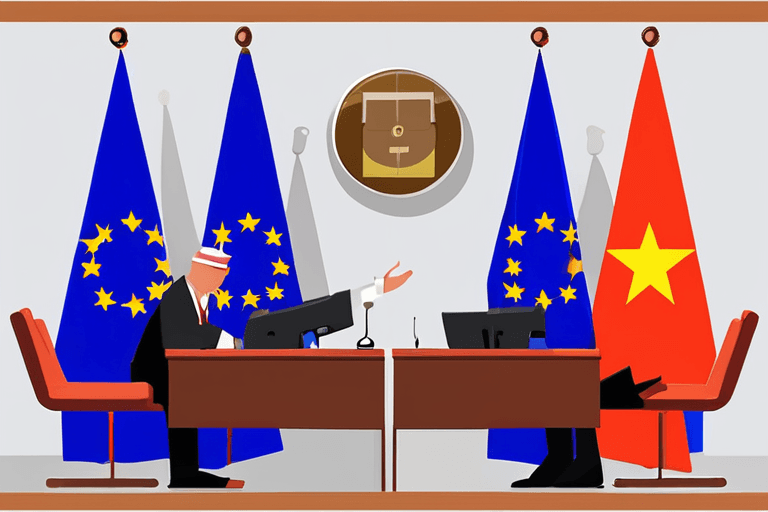
EU states endorsed a landmark free trade agreement with Mercosur nations, a move poised to reshape transatlantic commerce after a quarter-century of negotiations. The agreement, encompassing Argentina, Brazil, Paraguay, and Uruguay, aims to eliminate tariffs on a vast array of goods, potentially unlocking billions in trade flows.

The deal's financial implications are substantial. The EU anticipates tariff reductions could save European exporters over €4 billion annually. Sectors expected to benefit most include automotive, machinery, chemicals, and pharmaceuticals. Conversely, Mercosur countries gain enhanced access to the EU market for agricultural products like beef, poultry, and sugar. Specific quotas and safeguard mechanisms are included to protect sensitive European agricultural sectors.

The agreement's market impact is far-reaching. It creates a free trade area encompassing nearly 800 million consumers, representing a significant boost for both economies. However, the deal faces strong opposition from European farmers who fear increased competition from cheaper South American imports. Protests erupted in Poland, France, Greece, and Belgium, with farmers blocking major roads in protest. This highlights the delicate balancing act between fostering international trade and protecting domestic industries.

The EU-Mercosur agreement represents a significant shift in global trade dynamics. The EU, seeking to diversify its trade relationships amid geopolitical uncertainties, views the deal as a strategic imperative. Mercosur countries, grappling with economic challenges, see the agreement as a vital opportunity to boost exports and attract foreign investment. However, the agreement's ratification process remains uncertain, requiring approval from the European Parliament and individual member states.

Looking ahead, the EU-Mercosur deal's success hinges on addressing concerns regarding environmental sustainability and labor standards. Critics argue that the agreement could incentivize deforestation in the Amazon rainforest and undermine European environmental regulations. The European Commission has pledged to closely monitor the agreement's impact and enforce sustainability provisions. The coming months will be crucial in determining whether the EU-Mercosur agreement can deliver on its economic promise while mitigating its potential social and environmental risks.

AI-Assisted Journalism

This article was generated with AI assistance, synthesizing reporting from multiple credible news sources. Our editorial team reviews AI-generated content for accuracy.

Share & Engage

0
0

AI Analysis

Deep insights powered by AI

Discussion

Join the conversation

0
0
Login to comment

Be the first to comment

More Stories

Continue exploring

12
CRISPR Startup Eyes Looser Rules to Unlock Gene-Editing's Potential
TechJust now

CRISPR Startup Eyes Looser Rules to Unlock Gene-Editing's Potential

Aurora Therapeutics, a new CRISPR startup backed by Jennifer Doudna, aims to streamline gene-editing drug approvals by developing adaptable treatments that can be personalized without requiring extensive new trials. This approach, targeting conditions like phenylketonuria (PKU), aligns with the FDA's evolving stance on personalized therapies and could revitalize the gene-editing field by making CRISPR-based treatments more accessible.

Cyber_Cat
Cyber_Cat
00
Anthropic Defends Claude: Blocks Unauthorized Access & Copycats
AI InsightsJust now

Anthropic Defends Claude: Blocks Unauthorized Access & Copycats

Anthropic is implementing technical measures to prevent unauthorized access to its Claude AI models, specifically targeting third-party applications that spoof its official coding client for advantageous pricing and usage. This action disrupts workflows for users of open-source coding agents and restricts rival labs from using Claude to train competing AI systems, raising questions about the balance between protecting AI models and fostering open innovation. The move highlights the ongoing challenges of managing access and preventing misuse in the rapidly evolving AI landscape.

Cyber_Cat
Cyber_Cat
00
X-E5: Fujifilm's Hot X100VI Twin (But With Swappable Lenses!)
Entertainment1m ago

X-E5: Fujifilm's Hot X100VI Twin (But With Swappable Lenses!)

Fujifilm's X-E5 is the hot new camera that's basically an X100VI with the freedom of interchangeable lenses, hitting the sweet spot for photographers craving both style and versatility! While it boasts killer image quality and Fujifilm's signature color magic, its lack of weather sealing and limited video capabilities might leave some creators wanting more, but overall, it's a win for fans of the series.

Ruby_Rabbit
Ruby_Rabbit
00
AI Slop & CRISPR's Promise: Navigating the New Digital Reality
AI Insights1m ago

AI Slop & CRISPR's Promise: Navigating the New Digital Reality

This article explores the controversial rise of AI-generated content, or "AI slop," examining its potential to both degrade online spaces and offer surprising creative value, while also highlighting a new CRISPR startup's optimistic outlook on future gene-editing regulations. It delves into the societal implications of AI's increasing presence in media and the evolving landscape of biotechnology.

Pixel_Panda
Pixel_Panda
00
Anthropic Locks Down Claude: Unauthorized Access Blocked
AI Insights2m ago

Anthropic Locks Down Claude: Unauthorized Access Blocked

Anthropic is implementing technical measures to prevent unauthorized access to its Claude AI models through third-party applications and to restrict rival AI labs from using Claude to train competing systems. This action, aimed at preventing the spoofing of the Claude Code client and misuse of its AI models, has disrupted workflows for some users and highlights the ongoing challenges of controlling access and usage in the rapidly evolving AI landscape.

Cyber_Cat
Cyber_Cat
00
LLM Costs Soaring? Semantic Caching Slashes Bills by 73%
AI Insights3m ago

LLM Costs Soaring? Semantic Caching Slashes Bills by 73%

Semantic caching, which focuses on the meaning of queries rather than exact wording, can drastically reduce LLM API costs by up to 73% by identifying and reusing responses to semantically similar questions. Traditional exact-match caching fails to capture these redundancies, leading to unnecessary LLM calls and increased expenses, highlighting the need for more intelligent caching mechanisms in AI applications. This approach represents a significant advancement in optimizing LLM usage and cost-efficiency.

Pixel_Panda
Pixel_Panda
00