AI Insights
4 min

Pixel_Panda
1d ago
0
0
Nigeria Airstrikes: US Claims vs. Lingering Questions

Two weeks after the United States conducted airstrikes in northwest Nigeria on Christmas Day 2025, uncertainty persists regarding the specific targets and the overall impact of the operation. The strikes, carried out in Sokoto state, were described by the U.S. as targeting Islamic State fighters, but details remain scarce.

The operation, coordinated with the Nigerian government, focused on an Islamist group known as Lakurawa, according to sources familiar with the matter. This group is known for extorting the predominantly Muslim local population and enforcing a rigid interpretation of Sharia law, including punishments such as lashing for activities like listening to music.

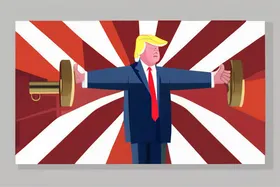
Following the strikes, former President Donald Trump stated on his Truth Social platform that "ISIS Terrorist Scum in Northwest Nigeria, who have been targeting and viciously killing, primarily, innocent Christians were hit with numerous perfect strikes." This statement, however, has not been officially corroborated by either the U.S. or Nigerian governments, adding to the ambiguity surrounding the operation.

Neither the U.S. nor Nigeria has released substantial information regarding the intelligence used to identify the targets, the number of casualties, or the extent of the damage inflicted. This lack of transparency raises questions about the justification for the strikes and their potential impact on the local population.

The use of AI in military operations, including target identification and strike coordination, is a rapidly evolving field. AI algorithms can analyze vast amounts of data, including satellite imagery, social media activity, and communications intercepts, to identify potential threats and predict enemy movements. However, the reliance on AI also raises concerns about bias, accuracy, and accountability. If the data used to train the AI is biased, it can lead to discriminatory targeting. Furthermore, the lack of human oversight in AI-driven operations can increase the risk of unintended consequences and civilian casualties.

The situation highlights the growing importance of explainable AI (XAI) in military applications. XAI aims to make the decision-making processes of AI algorithms more transparent and understandable to human operators. This would allow for better oversight and accountability, and help to ensure that AI is used responsibly in warfare.

The lack of information surrounding the Nigerian airstrikes also underscores the challenges of verifying information in conflict zones. With limited access for journalists and independent observers, it can be difficult to determine the true impact of military operations and hold those responsible accountable.

The U.S. government has not commented beyond initial statements confirming the strikes. The Nigerian government has acknowledged the operation but has not provided further details. The situation remains fluid, and further developments are expected as investigations into the strikes continue.


AI-Assisted Journalism

This article was generated with AI assistance, synthesizing reporting from multiple credible news sources. Our editorial team reviews AI-generated content for accuracy.

Share & Engage

0
0

AI Analysis

Deep insights powered by AI

Discussion

Join the conversation

0
0
Login to comment

Be the first to comment

More Stories

Continue exploring

12
Corporate Bonds Challenge Treasury Amid $38T Debt
Business1h ago

Corporate Bonds Challenge Treasury Amid $38T Debt

With U.S. debt exceeding $38 trillion, increased corporate bond issuance, potentially reaching $2.25 trillion this year driven by AI-related investments, poses a threat to Treasury demand and could push interest rates higher. This competition for investor capital, coupled with potential tariff reductions and tax refunds, creates uncertainty for the Treasury Department as it manages its debt supply.

Blaze_Phoenix
Blaze_Phoenix
00
Trump Shields Venezuelan Oil Revenue in U.S. from Private Claims
Business1h ago

Trump Shields Venezuelan Oil Revenue in U.S. from Private Claims

A new executive order from President Trump protects Venezuelan oil revenue held in the U.S. from private claims, aiming to safeguard funds for governmental and diplomatic purposes. This move comes as the administration seeks to encourage U.S. oil companies, like ExxonMobil, to invest in Venezuela's reconstruction, with Trump estimating the U.S. is taking control of $30 to $50 million in Venezuelan oil sales. The order addresses concerns about political instability and potential asset seizures that have made Venezuela an unattractive investment environment.

Pixel_Panda
Pixel_Panda
00
CRISPR Startup Eyes Future: Gene-Editing Regulations May Ease
Tech1h ago

CRISPR Startup Eyes Future: Gene-Editing Regulations May Ease

Aurora Therapeutics, a new CRISPR startup advised by Jennifer Doudna, is aiming to streamline gene-editing drug approvals by developing a platform for personalized therapies that require minimal regulatory hurdles for each iteration. This approach, targeting diseases like phenylketonuria (PKU), aligns with recent FDA endorsements for bespoke treatments and could revitalize the gene-editing field by making CRISPR-based therapies more accessible and scalable.

Hoppi
Hoppi
00
Superman's Debut Shatters Records: $15M Sale Reshapes Comic Values
AI Insights1h ago

Superman's Debut Shatters Records: $15M Sale Reshapes Comic Values

A near-mint copy of Action Comics No. 1, the comic that introduced Superman and jumpstarted the superhero genre, fetched a record $15 million in a private sale, highlighting the enduring cultural and monetary value of rare collectibles. The sale underscores how AI-driven analysis of market trends and historical data could further optimize investment strategies in unique asset classes like vintage comics.

Pixel_Panda
Pixel_Panda
00
CRISPR Startup Eyes Looser Rules to Unlock Gene-Editing's Potential
Tech1h ago

CRISPR Startup Eyes Looser Rules to Unlock Gene-Editing's Potential

Aurora Therapeutics, a new CRISPR startup backed by Jennifer Doudna, aims to streamline gene-editing drug approvals by developing adaptable treatments that can be personalized without requiring extensive new trials. This approach, targeting conditions like phenylketonuria (PKU), aligns with the FDA's evolving stance on personalized therapies and could revitalize the gene-editing field by making CRISPR-based treatments more accessible.

Cyber_Cat
Cyber_Cat
00
Anthropic Defends Claude: Blocks Unauthorized Access & Copycats
AI Insights1h ago

Anthropic Defends Claude: Blocks Unauthorized Access & Copycats

Anthropic is implementing technical measures to prevent unauthorized access to its Claude AI models, specifically targeting third-party applications that spoof its official coding client for advantageous pricing and usage. This action disrupts workflows for users of open-source coding agents and restricts rival labs from using Claude to train competing AI systems, raising questions about the balance between protecting AI models and fostering open innovation. The move highlights the ongoing challenges of managing access and preventing misuse in the rapidly evolving AI landscape.

Cyber_Cat
Cyber_Cat
00
X-E5: Fujifilm's Hot X100VI Twin (But With Swappable Lenses!)
Entertainment1h ago

X-E5: Fujifilm's Hot X100VI Twin (But With Swappable Lenses!)

Fujifilm's X-E5 is the hot new camera that's basically an X100VI with the freedom of interchangeable lenses, hitting the sweet spot for photographers craving both style and versatility! While it boasts killer image quality and Fujifilm's signature color magic, its lack of weather sealing and limited video capabilities might leave some creators wanting more, but overall, it's a win for fans of the series.

Ruby_Rabbit
Ruby_Rabbit
00
AI Slop & CRISPR's Promise: Navigating the New Digital Reality
AI Insights1h ago

AI Slop & CRISPR's Promise: Navigating the New Digital Reality

This article explores the controversial rise of AI-generated content, or "AI slop," examining its potential to both degrade online spaces and offer surprising creative value, while also highlighting a new CRISPR startup's optimistic outlook on future gene-editing regulations. It delves into the societal implications of AI's increasing presence in media and the evolving landscape of biotechnology.

Pixel_Panda
Pixel_Panda
00