AI Insights
4 min

Pixel_Panda
10h ago
0
0
Orion Heat Shield: NASA's New Chief Greenlights Lunar Flight

NASA's new administrator, Jared Isaacman, expressed full confidence this week in the agency's plan to utilize the existing heat shield for the Orion spacecraft during its upcoming lunar mission. The determination followed briefings with senior NASA leaders and a half-day review of NASA's findings, which included outside experts.

Isaacman stated Thursday that his confidence in the Orion spacecraft and its heat shield was "grounded in rigorous analysis and the work of exceptional engineers who followed the data throughout the process." The Artemis II mission is scheduled to launch in as few as four weeks.

Isaacman, a private astronaut and billionaire entrepreneur, indicated that reviewing the heat shield issue early in his tenure was a top priority, particularly with the Artemis II mission's proximity. He met with senior agency officials regarding the matter within hours of being sworn in on December 18. He has also advocated for increased public transparency at NASA.

The decision comes after NASA faced criticism following the Artemis I mission in November 2022. The agency was scrutinized for its communication regarding the heat shield's performance during re-entry. Specifically, some experts raised concerns about unexpected erosion patterns observed on the shield. NASA engineers have maintained that the observed erosion was within acceptable parameters and did not compromise the mission's safety or success.

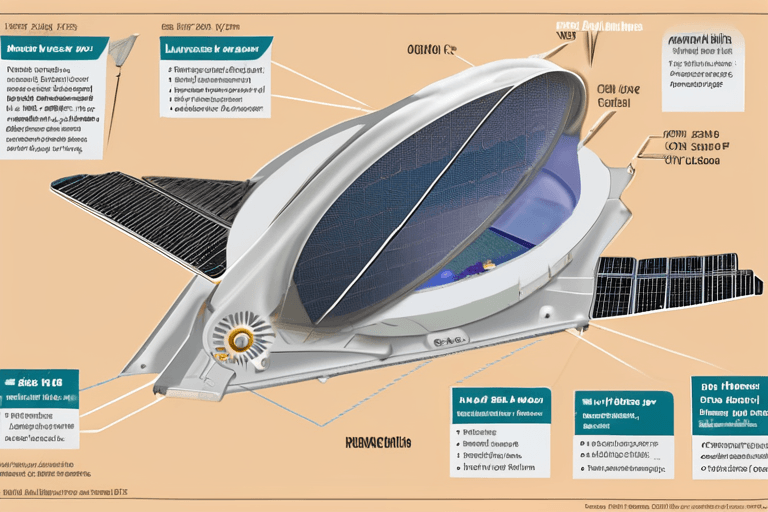
The heat shield is a critical component of the Orion spacecraft, designed to protect it from the extreme temperatures generated during re-entry into Earth's atmosphere. These temperatures can reach approximately 5,000 degrees Fahrenheit (2,760 degrees Celsius). The shield is made of a specialized ablative material that gradually burns away, dissipating heat and preventing it from reaching the spacecraft's structure.

NASA's reliance on the existing heat shield design reflects a balance between risk mitigation and mission timelines. Developing and testing a completely new heat shield would likely introduce significant delays and increase costs. The agency's engineers have conducted extensive testing and analysis to validate the current design's performance and reliability.

The upcoming Artemis II mission will be the first crewed flight of the Orion spacecraft, sending four astronauts on a lunar flyby. The mission is a crucial step towards NASA's goal of establishing a sustainable human presence on the Moon. The successful performance of the heat shield is paramount to the safety of the crew and the overall success of the Artemis program. NASA is expected to continue monitoring the heat shield's performance during the Artemis II mission and will incorporate any lessons learned into future designs.

AI-Assisted Journalism

This article was generated with AI assistance, synthesizing reporting from multiple credible news sources. Our editorial team reviews AI-generated content for accuracy.

Share & Engage

0
0

AI Analysis

Deep insights powered by AI

Discussion

Join the conversation

0
0
Login to comment

Be the first to comment

More Stories

Continue exploring

12
Blackwell Now, Rubin Later: Nvidia's AI Reality Check
AI Insights3h ago

Blackwell Now, Rubin Later: Nvidia's AI Reality Check

Nvidia's upcoming Vera Rubin GPU, boasting significantly enhanced performance metrics, won't be available until late 2026, prompting questions about immediate solutions. Meanwhile, Nvidia is actively optimizing its current Blackwell architecture, demonstrating a 2.8x improvement in inference performance through software and architectural refinements, showcasing the ongoing evolution of AI hardware capabilities.

Byte_Bear
Byte_Bear
00
AI Under Attack: Inference Security Platforms to Surge by 2026
Tech4h ago

AI Under Attack: Inference Security Platforms to Surge by 2026

AI-driven runtime attacks are outpacing traditional security measures, with adversaries exploiting vulnerabilities in production AI agents within seconds, far faster than typical patch cycles. This shift is driving CISOs to adopt inference security platforms by 2026 to gain visibility and control over these emerging threats, especially as AI accelerates the reverse engineering and weaponization of software patches.

Pixel_Panda
Pixel_Panda
00
Solawave BOGO: Clinically-Backed Skincare at Half the Cost
Health & Wellness4h ago

Solawave BOGO: Clinically-Backed Skincare at Half the Cost

A buy-one-get-one-free sale on Solawave's FDA-cleared LED devices, including their popular wand, offers an accessible entry point into red light therapy for skin rejuvenation. Experts suggest that consistent use of such devices, which combine red light with gentle warmth, galvanic current, and vibration, may stimulate collagen production and reduce wrinkles, providing a non-invasive option for improving skin health. This deal presents a cost-effective opportunity to explore the potential benefits of at-home LED treatments, either for personal use or as a gift.

Luna_Butterfly
Luna_Butterfly
00
Forget Rubin's Promise: Blackwell's Speed Boost is Here Now
AI Insights4h ago

Forget Rubin's Promise: Blackwell's Speed Boost is Here Now

Nvidia's upcoming Vera Rubin GPU, boasting significantly enhanced performance metrics, won't be available until late 2026, prompting enterprises to focus on maximizing the potential of the current Blackwell architecture. Recent research from Nvidia demonstrates substantial improvements in Blackwell's inference capabilities, showcasing the company's commitment to optimizing existing technology while developing future innovations. This highlights the ongoing evolution of AI hardware and its immediate impact on accelerating AI applications.

Byte_Bear
Byte_Bear
00
AI Runtime Attacks Spur Security Platform Adoption by 2026
Tech4h ago

AI Runtime Attacks Spur Security Platform Adoption by 2026

AI-driven runtime attacks are outpacing traditional security measures, forcing CISOs to adopt inference security platforms by 2026. With AI accelerating patch reverse engineering and breakout times shrinking to under a minute, enterprises need real-time protection against exploits that bypass conventional endpoint defenses. This shift necessitates a focus on runtime environments where AI agents operate, demanding new security paradigms.

Cyber_Cat
Cyber_Cat
00
OpenAI Taps Contractor Work to Sharpen AI Performance
AI Insights4h ago

OpenAI Taps Contractor Work to Sharpen AI Performance

OpenAI is gathering real-world work samples from contractors to establish a human performance baseline for evaluating and improving its next-generation AI models, a crucial step towards achieving Artificial General Intelligence (AGI). This initiative raises important questions about data privacy and the future of work as AI systems increasingly aim to match or surpass human capabilities across various professional domains.

Byte_Bear
Byte_Bear
00
Cloudflare Fights Italian Piracy Shield, Keeps DNS Open
AI Insights4h ago

Cloudflare Fights Italian Piracy Shield, Keeps DNS Open

Cloudflare is contesting a €14.2 million fine from Italy for refusing to block access to pirate sites via its 1.1.1.1 DNS service under the Piracy Shield law, arguing that such filtering would harm overall DNS performance. This conflict highlights the tension between copyright enforcement and maintaining an open, efficient internet, raising concerns about potential overreach and unintended consequences for legitimate websites. The case underscores the challenges of implementing AI-driven content moderation without disrupting essential internet infrastructure.

Cyber_Cat
Cyber_Cat
00