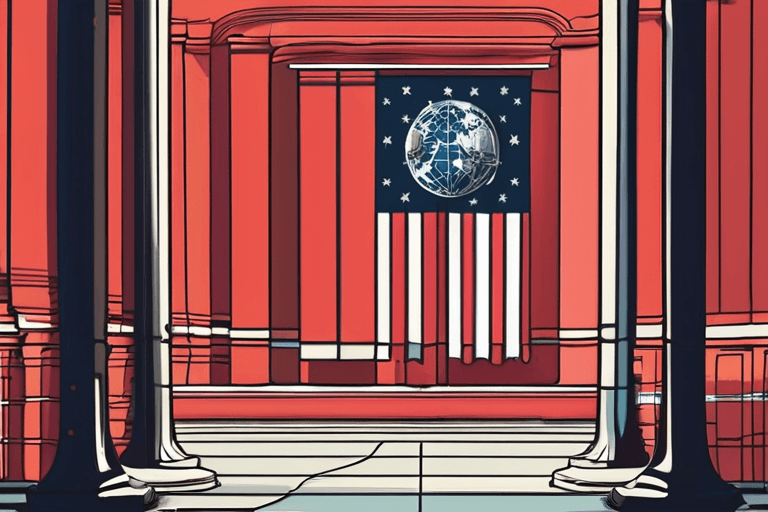
President Donald Trump ordered his administration to withdraw from more than 60 international agencies, approximately half of which are affiliated with the United Nations, signaling a significant disengagement from the post-World War II global order. The move, initiated in early January 2026, has sparked international concern and debate about the future of multilateralism.
The Trump administration justified the withdrawal by arguing that membership in these organizations is contrary to U.S. interests. The Secretary of State characterized some of the agencies as "useless or wasteful," reflecting a broader sentiment within the administration that the U.S. is bearing a disproportionate burden in funding and supporting international initiatives.
The United Nations responded to the U.S. decision with a statement affirming its commitment to its responsibilities, indicating that its work would continue despite the withdrawal of U.S. support. The UN's statement underscored the importance of international cooperation in addressing global challenges such as climate change, poverty, and conflict resolution.
Adolfo Franco, a Republican strategist and former adviser to U.S. Senator John McCain, suggested the move reflects a long-standing debate within the U.S. regarding the balance between national sovereignty and international cooperation. He noted that some Americans believe international organizations infringe upon U.S. autonomy and do not adequately serve U.S. interests.
Andrew Gilmour, former UN assistant secretary-general for human rights, expressed concern that the U.S. withdrawal could weaken the international system and undermine efforts to promote human rights and global security. He argued that U.S. leadership is essential for addressing complex global challenges and that its absence could create a vacuum that other countries might exploit.
Matthew Duss, executive VP of the Center for International Policy and a former foreign policy adviser to Senator Bernie Sanders, criticized the Trump administration's decision as short-sighted and detrimental to U.S. interests. He argued that international cooperation is essential for addressing global challenges and that the U.S. benefits from its participation in international organizations.
The U.S. has historically played a leading role in establishing and supporting international organizations, including the United Nations, the World Bank, and the International Monetary Fund. These organizations were created in the aftermath of World War II to promote peace, stability, and economic development. The U.S. decision to withdraw from these organizations represents a significant departure from this historical role.
The implications of the U.S. withdrawal are still unfolding. Some observers fear that it could embolden other countries to disregard international norms and agreements. Others believe that it could create an opportunity for other countries to step up and fill the leadership vacuum left by the U.S. The long-term impact on the multilateral global order remains to be seen.

















Discussion
Join the conversation
Be the first to comment