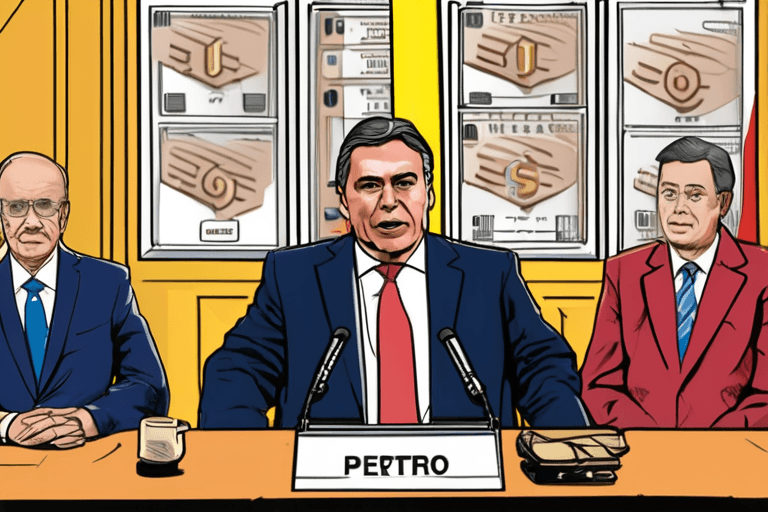
Colombian President Gustavo Petro affirmed his government's commitment to cooperating with the United States on combating narcotics, despite what he characterized as recent "insults and threats" from Washington. Speaking in an interview with Al Jazeera's Teresa Bo in Bogota, Petro emphasized the importance of maintaining open communication channels with the U.S., even amidst escalating tensions.
Petro's remarks followed a phone conversation with U.S. President Donald Trump on Wednesday, which Petro described as a significant step towards direct communication that had not previously existed. The call occurred after several days of heightened rhetoric, including Trump's veiled threats of potential military action against Colombia.
The Colombian president's softened tone signals a desire to de-escalate tensions and preserve the long-standing security partnership between the two nations. Cooperation on counter-narcotics efforts has been a cornerstone of the U.S.-Colombia relationship for decades, with Washington providing significant financial and logistical support to Colombian law enforcement and military operations.
However, recent disagreements over drug policy and other issues have strained relations. Petro, a leftist leader, has advocated for a more comprehensive approach to drug control that includes addressing the root causes of drug production and consumption, rather than solely focusing on eradication and interdiction. This approach has reportedly clashed with the Trump administration's more hardline stance.
Adding to the complexity, Trump invited Petro to the White House for a meeting, a move that some analysts interpret as an attempt to smooth over diplomatic friction. The invitation came shortly after Trump made controversial statements suggesting he did not need to adhere to international law, following the abduction of Venezuelan President Nicolas Maduro.
The specific details of the planned White House meeting remain unclear, but it is expected that discussions will focus on counter-narcotics strategies, regional security, and trade relations. The meeting's outcome could significantly influence the future trajectory of U.S.-Colombia relations.















Discussion
Join the conversation
Be the first to comment