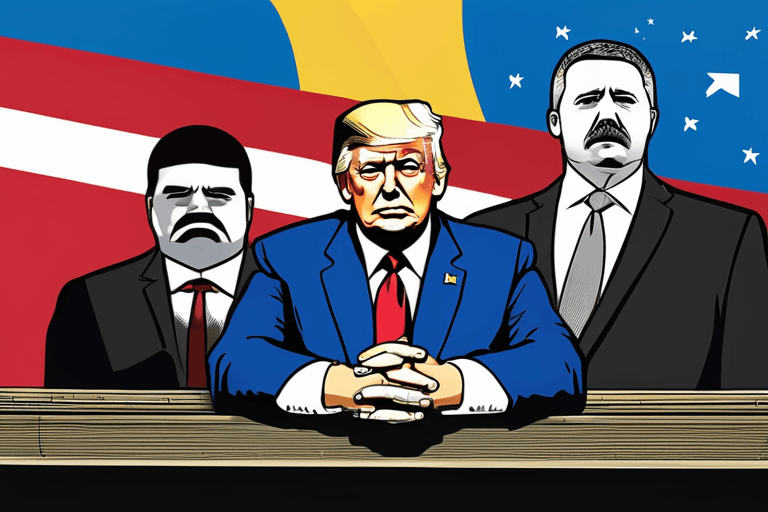
In early 2026, President Donald Trump's administration initiated an operation in Venezuela that resulted in the seizure of President Nicolás Maduro. Aboard Air Force One, en route from Florida to Washington D.C., Trump reportedly told reporters that the U.S. government was now in charge of Venezuela and that American companies were prepared to exploit the country's oil reserves.
The operation, which Trump described in detail, occurred without any U.S. casualties, though he acknowledged fatalities among Venezuelan and Cuban individuals. Following the Venezuelan action, Trump reportedly signaled that other nations could face similar interventions.
The events in Venezuela have sparked debate about the nature of U.S. foreign policy under the Trump administration. Some observers characterize the intervention as a manifestation of a new form of American imperialism, while others argue it represents a more transparent articulation of traditional U.S. foreign policy objectives.
Critics of the administration contend that the intervention in Venezuela represents an aggressive expansion of U.S. power and influence, reminiscent of historical imperialistic practices. They point to the stated intention of exploiting Venezuela's oil wealth as evidence of economic motivations driving the intervention.
Conversely, some analysts argue that the Trump administration's actions are simply a more candid expression of long-standing U.S. foreign policy goals. They suggest that previous administrations pursued similar objectives through different means, often cloaked in diplomatic language and multilateral initiatives. This perspective posits that Trump's approach is merely a stripping away of the pretense that has historically accompanied U.S. foreign policy.
The situation in Venezuela remains fluid, and the long-term implications of the U.S. intervention are yet to be fully understood. The international community is closely watching developments, and the response from other nations will likely shape the future trajectory of the crisis.


















Discussion
Join the conversation
Be the first to comment