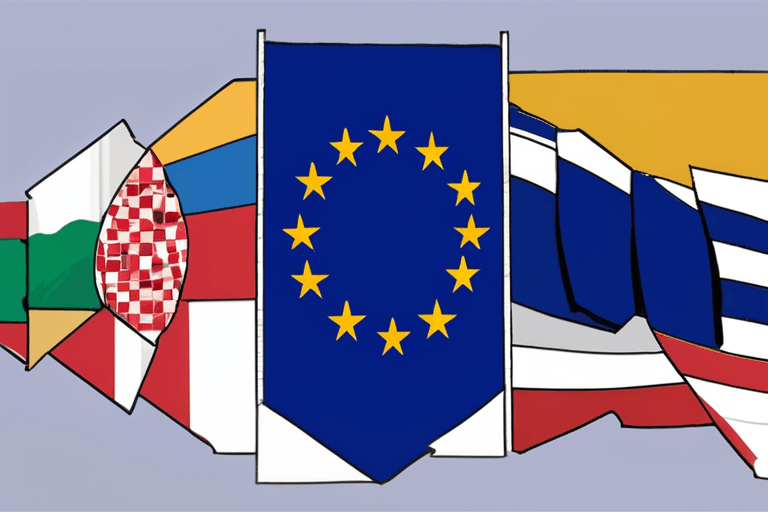
EU states backed a controversial free trade agreement with Mercosur, a bloc of Latin American countries comprising Argentina, Brazil, Paraguay, and Uruguay. The agreement, finalized after 25 years of negotiations, aimed to create one of the world's largest free trade areas.
The deal's financial implications are significant. It is projected to eliminate tariffs on over 90% of goods traded between the two blocs, potentially saving EU companies over €4 billion in duties annually. The EU anticipates increased exports of manufactured goods, machinery, and automobiles to Mercosur countries. Conversely, Mercosur countries expect to boost exports of agricultural products, including beef, sugar, and poultry, to the EU.
The agreement's market impact is expected to be substantial. While proponents highlight the potential for economic growth and diversification, critics, particularly within the agricultural sector, expressed concerns about increased competition and potential price depression. Farmers in countries like Poland, France, Greece, and Belgium staged protests, blocking roads in major cities, fearing an influx of cheaper agricultural imports from Mercosur. Opposition parties in France even attempted to leverage the deal to challenge the government.
The EU-Mercosur agreement represents a strategic move to strengthen trade relations and diversify supply chains. For the EU, it provides access to a large and growing market in Latin America, while for Mercosur, it offers an opportunity to increase exports and attract foreign investment. However, the deal also raises questions about environmental sustainability, labor standards, and the potential impact on domestic industries.
Looking ahead, the agreement faces further scrutiny and potential challenges. Ratification by individual EU member states and the European Parliament is required, and opposition from various sectors could delay or even derail the process. The long-term success of the agreement will depend on addressing concerns about its social and environmental impact, ensuring fair competition, and fostering sustainable development in both regions.
















Discussion
Join the conversation
Be the first to comment