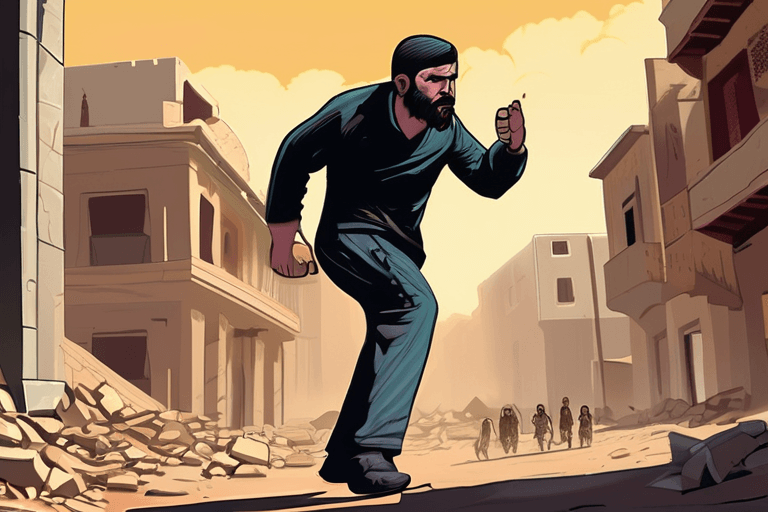
Residents of Aleppo, Syria, are facing a precarious situation as intense fighting between the Syrian army and the Kurdish-led Syrian Democratic Forces (SDF) continues, forcing many to flee their homes in predominantly Kurdish neighborhoods. The clashes, which escalated significantly this week, have left civilians caught between hope for a resolution and fear for their safety, according to reports from the ground.
The fighting is concentrated in areas such as Sheikh Maqsoud and Ashrafieh, where heavy artillery shelling has become a constant threat. "What I encountered was far worse than I expected," reported Resul Serdar Atas, a journalist reporting from Aleppo. His team even came under attack, with one bullet striking their equipment, highlighting the dangers faced by those attempting to document the situation.
The current round of clashes is seen as more serious than previous incidents over the past year, suggesting a potential escalation of the conflict. The underlying cause is the Syrian government's demand for the SDF to integrate its tens of thousands of troops into state institutions, a condition stipulated in an agreement reached last March. However, tensions remain high, and the integration process has stalled, leading to renewed hostilities.
The Syrian army declared a ceasefire in Aleppo following the heavy clashes, but the situation remains fragile. The effectiveness and duration of the ceasefire are uncertain, leaving residents in a state of anxiety. It is unclear whether this ceasefire will hold or if it is merely a temporary pause in the fighting.
The conflict between the Syrian government and the SDF has been ongoing for years, with control of territory and resources being major points of contention. The SDF, backed by the United States, has been instrumental in fighting ISIS in the region. However, the Syrian government views the SDF's autonomous control of certain areas as a challenge to its sovereignty.
The impact of the fighting extends beyond the immediate physical danger. The disruption of daily life, displacement of residents, and damage to infrastructure are taking a toll on the city. The long-term consequences of the conflict on Aleppo's social and economic fabric remain to be seen.
Efforts to contain the tension and find a lasting solution are ongoing, but the path forward is unclear. The involvement of various international actors and the complex political landscape of Syria add to the challenge of achieving a peaceful resolution. The residents of Aleppo remain hopeful for an end to the violence, but fear that the current ceasefire may not be enough to bring lasting peace to the war-torn city.

















Discussion
Join the conversation
Be the first to comment